





If you have searched for dental treatment abroad, you have almost certainly come across the phrase "Turkey teeth." Antalya, with its modern dental clinics, direct flights from across Europe and year-round sunshine, has become one of the most popular cities for this kind of treatment. For some people, "Turkey teeth" means a bright, confident new smile at a fraction of the price they were quoted at home. For others it brings to mind photos of overly white, bulky teeth and stories of painful complications.
Both pictures are real, and they come from very different kinds of treatment. This guide explains what "Turkey teeth" actually means, why some patients end up unhappy, and the questions to ask so your result in Antalya looks natural and lasts.
What Does "Turkey Teeth" Actually Mean?
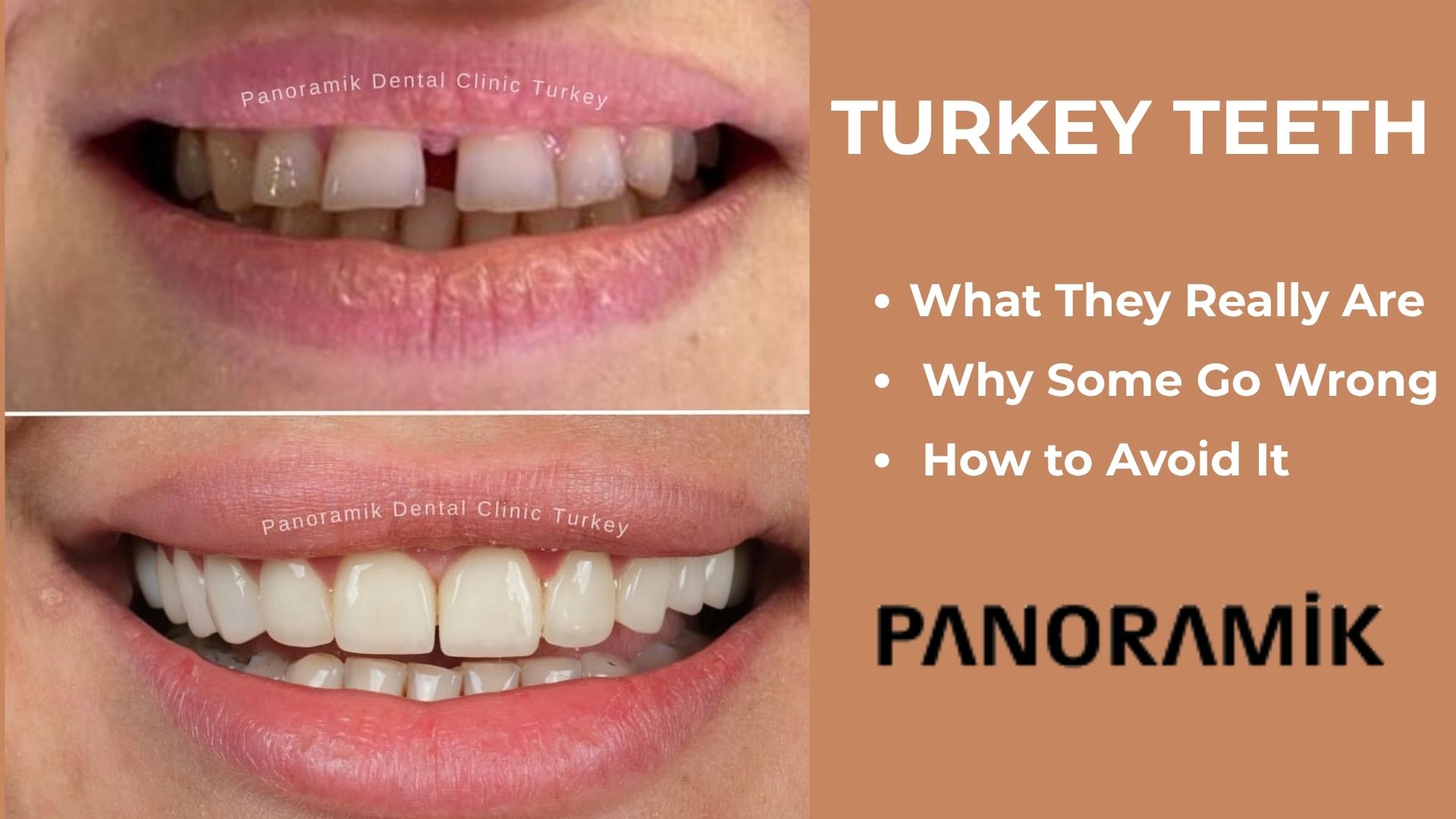
"Turkey teeth" is not a medical term. It is a nickname, mostly used in the UK, for cosmetic dental work done in Turkey, usually a full set of upper and lower restorations that creates a uniform, very white smile.
The phrase covers several different treatments:
- Porcelain or E-Max veneers: thin ceramic shells bonded to the front of the teeth.
- Zirconia or porcelain crowns: caps that cover the entire tooth.
- Composite veneers or bonding: tooth-coloured resin applied directly to the teeth.
- Hollywood Smile: a full smile makeover, often combining veneers, crowns and whitening.
The important point is that these treatments are not interchangeable. Some "Turkey teeth gone wrong" stories involve patients who thought they were getting veneers, but were actually given full crowns on healthy teeth.
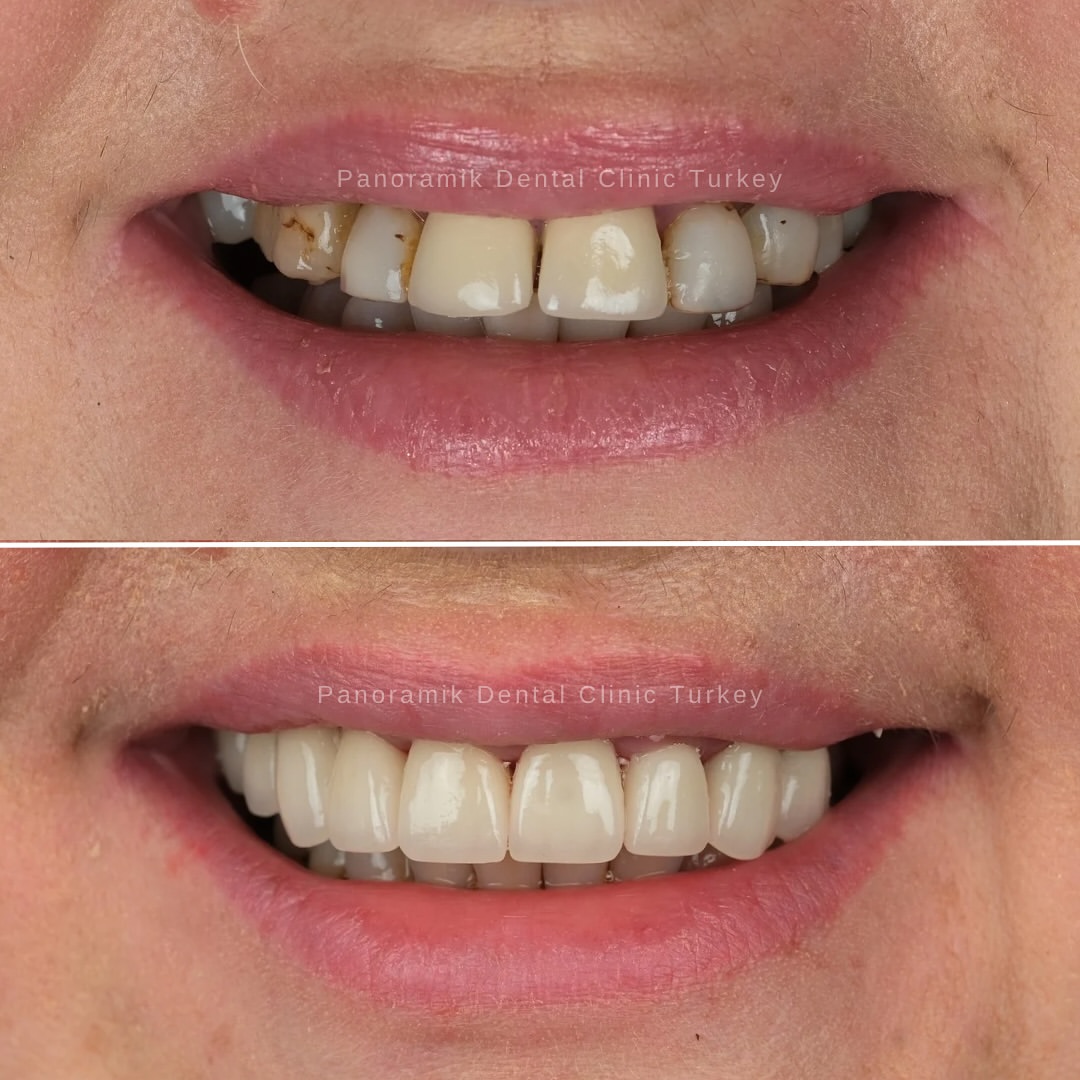
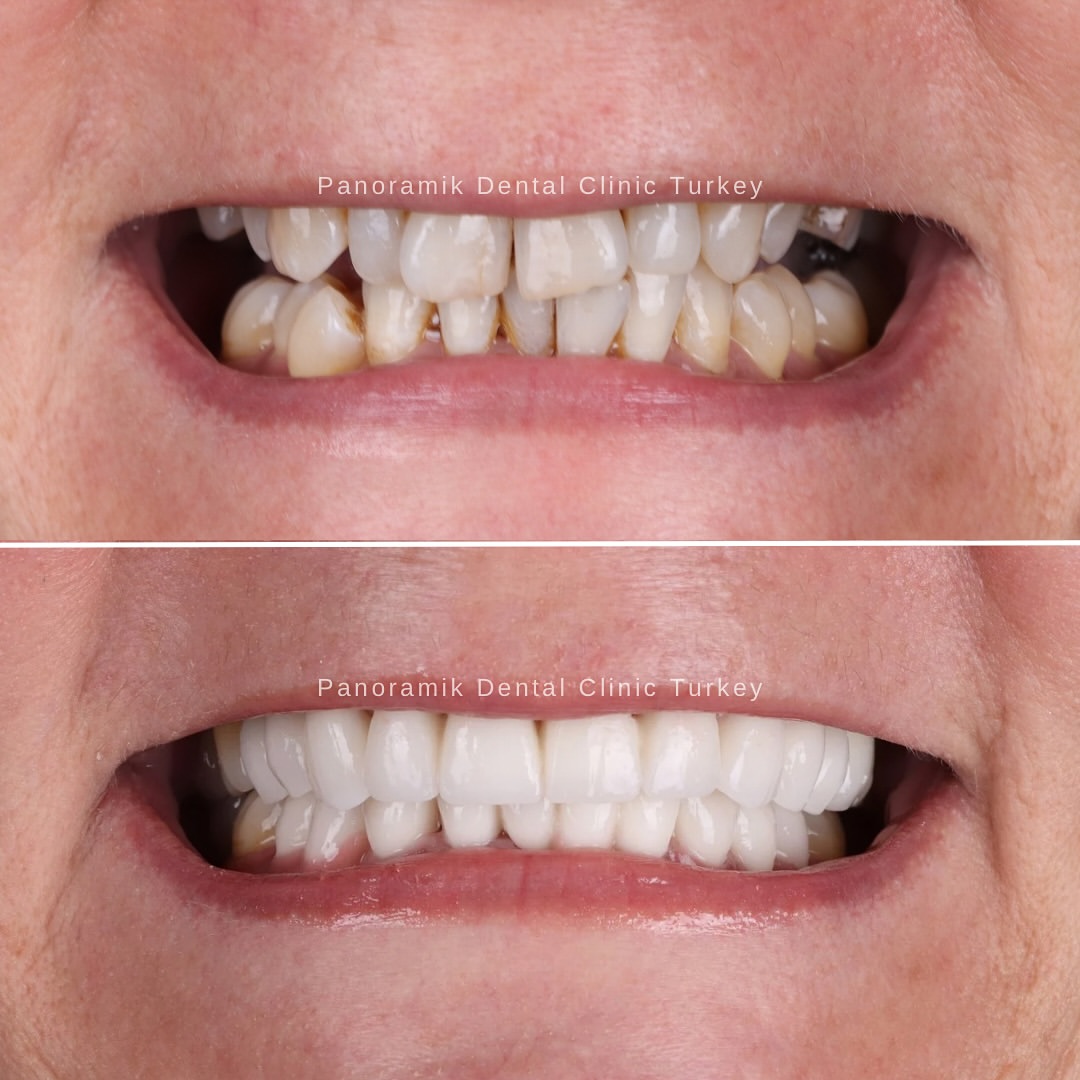
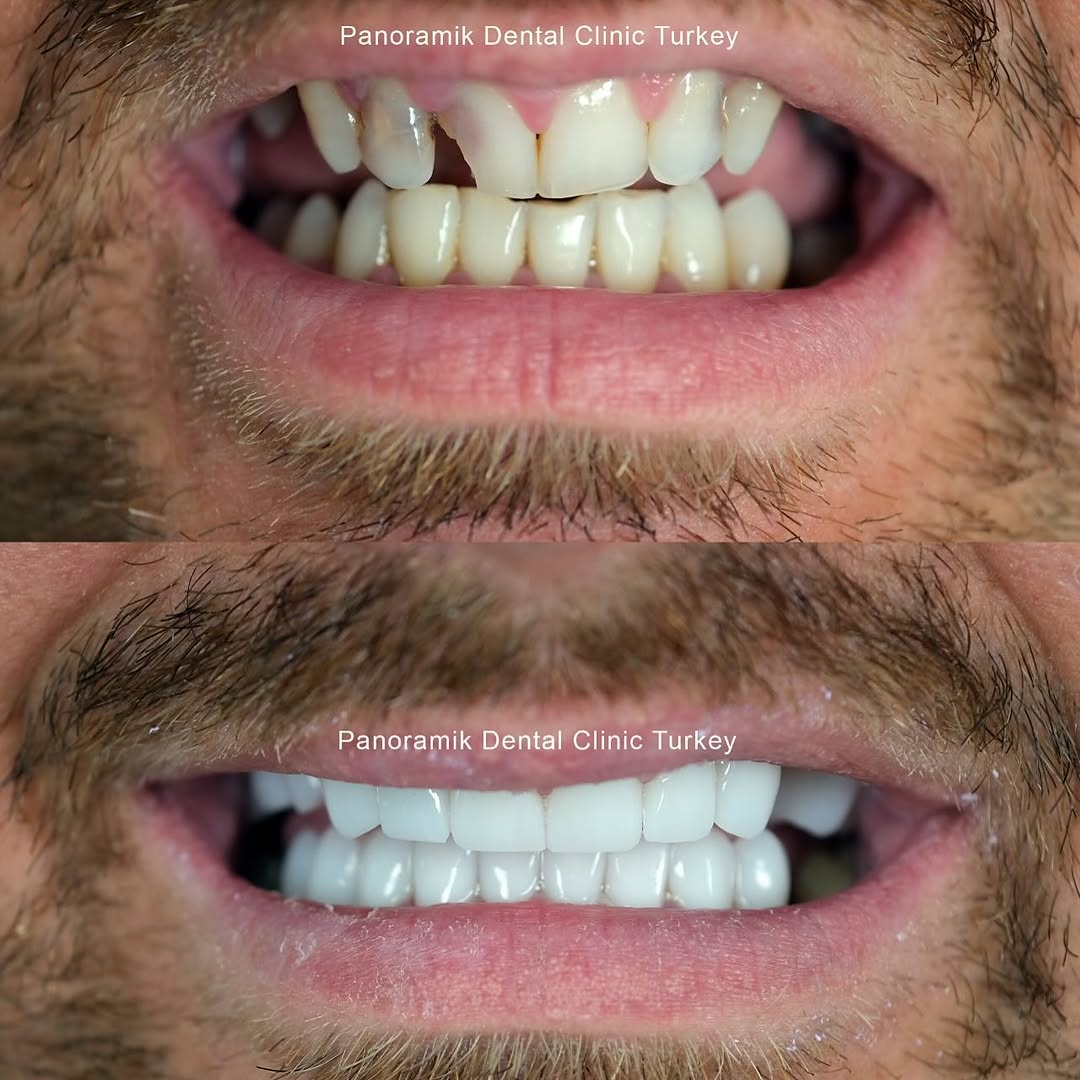
Before and after: two smile makeovers completed at Panoramik Dental Clinic in Antalya.
Crowns vs Veneers: The Difference Most Patients Aren't Told
This is the single most important thing to understand before booking treatment in Antalya or anywhere else.
A veneer covers only the front surface of the tooth. Preparation is usually minimal, often a fraction of a millimetre of enamel, and in some cases none at all. Most of your natural tooth stays intact.
A crown covers the whole tooth. To make room for it, the tooth is reduced on all sides, which removes a significant amount of healthy structure. Crowns are the right choice for teeth that are already heavily filled, cracked, root-canal treated or badly worn. They are rarely the right choice for healthy, straight teeth that only need a colour or shape change.
| Veneers | Crowns | |
|---|---|---|
| Coverage | Front surface only | Entire tooth |
| Tooth reduction | Minimal | Substantial, all sides |
| Best for | Colour, shape, small gaps, minor chips | Heavily damaged or weakened teeth |
| Reversibility | Generally irreversible when natural tooth structure is removed | Irreversible |
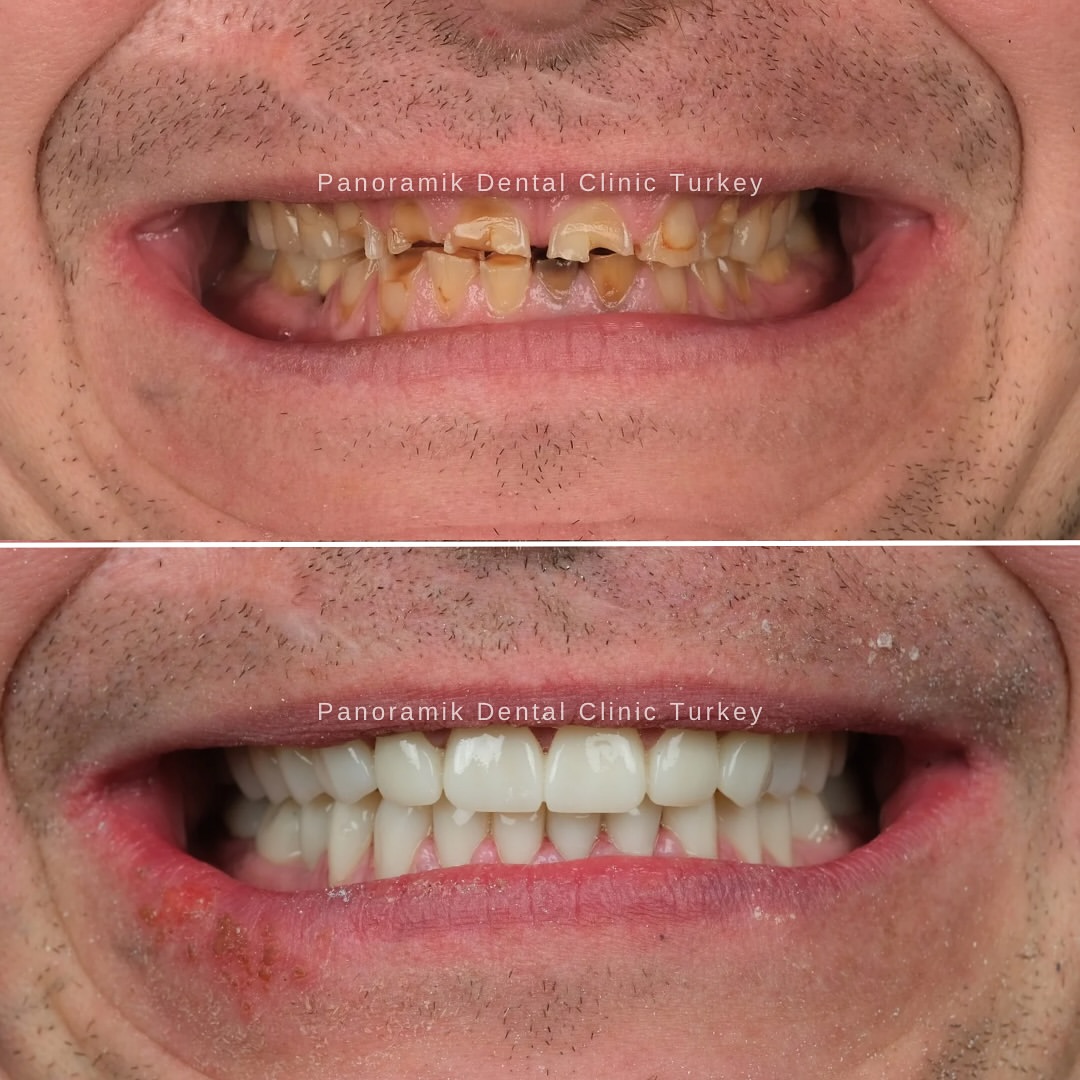
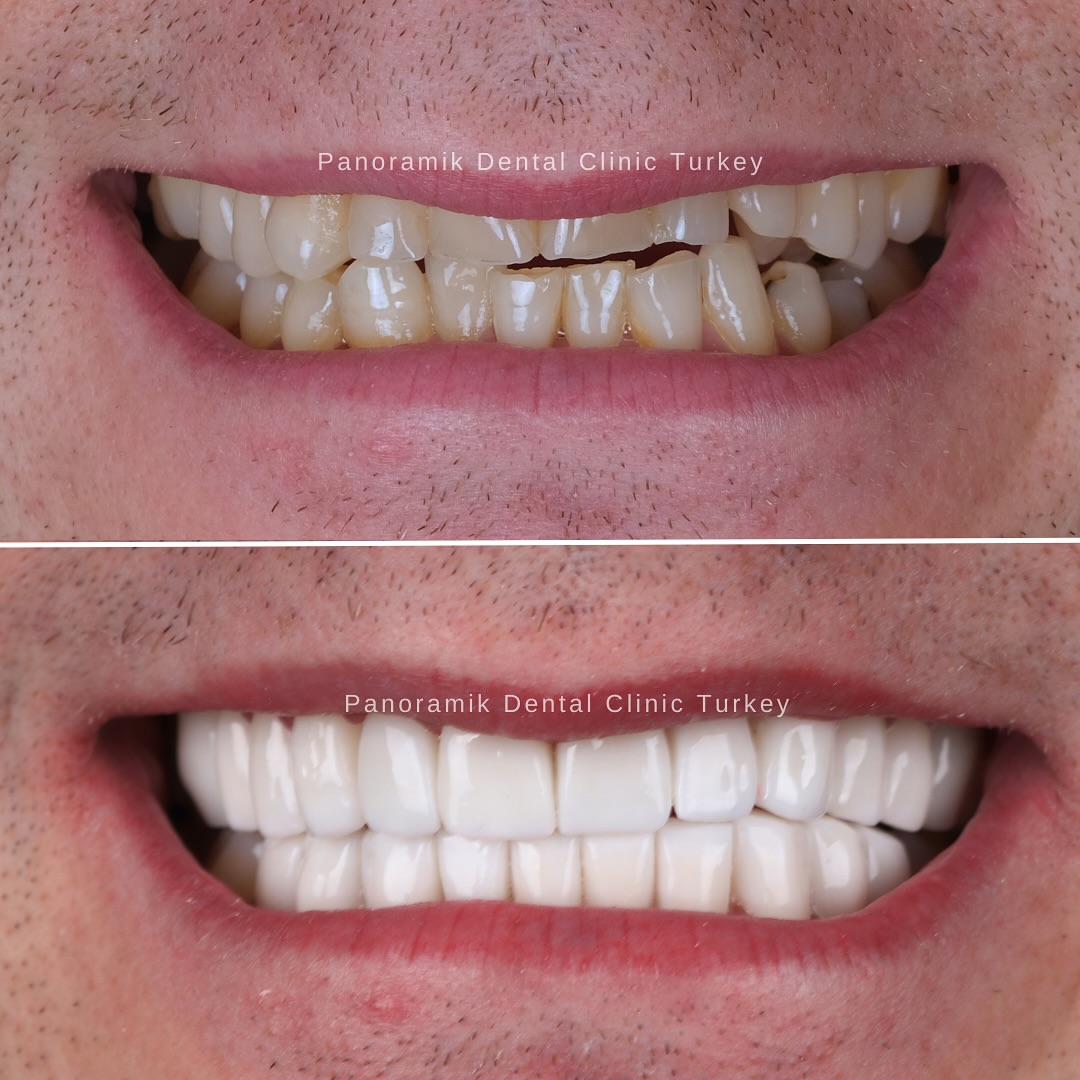
Badly worn, broken or heavily damaged teeth are the kind of cases where full-coverage restorations make sense.
When healthy teeth are crowned purely for cosmetic reasons, the risk of sensitivity, nerve irritation and later root canal treatment increases. That is why an honest clinic will tell you if veneers, bonding or whitening can achieve your goal, even if a full set of crowns would cost more.
You can read more in our guides to laminate veneers vs crowns and zirconia vs laminate.
Why Some Turkey Teeth Go Wrong
Most problems are not caused by the country or the city. They are caused by how treatment is planned and delivered. The common issues are:
1. Over-preparation of healthy teeth
Grinding healthy teeth down for crowns when a less invasive option would be suitable can unnecessarily remove healthy tooth structure and increase the risk of long-term complications.
2. Rushed timelines
Trying to complete extractions, root canals, implants and a full set of restorations in a few days leaves no time for gums to settle or for the dentist to check the fit and bite properly.
3. Skipping diagnostics
Treating without a proper examination, X-rays or a CT scan means existing decay, gum disease or infection can be sealed under new restorations.
4. Unsuitable cases
Not every mouth is ready for cosmetic work. Active gum disease, untreated decay or a strong grinding habit should be addressed first.
5. Unrealistic shade and shape choices
Extremely white, oversized teeth can look artificial and may not suit your face. Shade and shape should be planned around your skin tone, lip line and facial proportions. Our article on veneer designs according to face types explains this further.
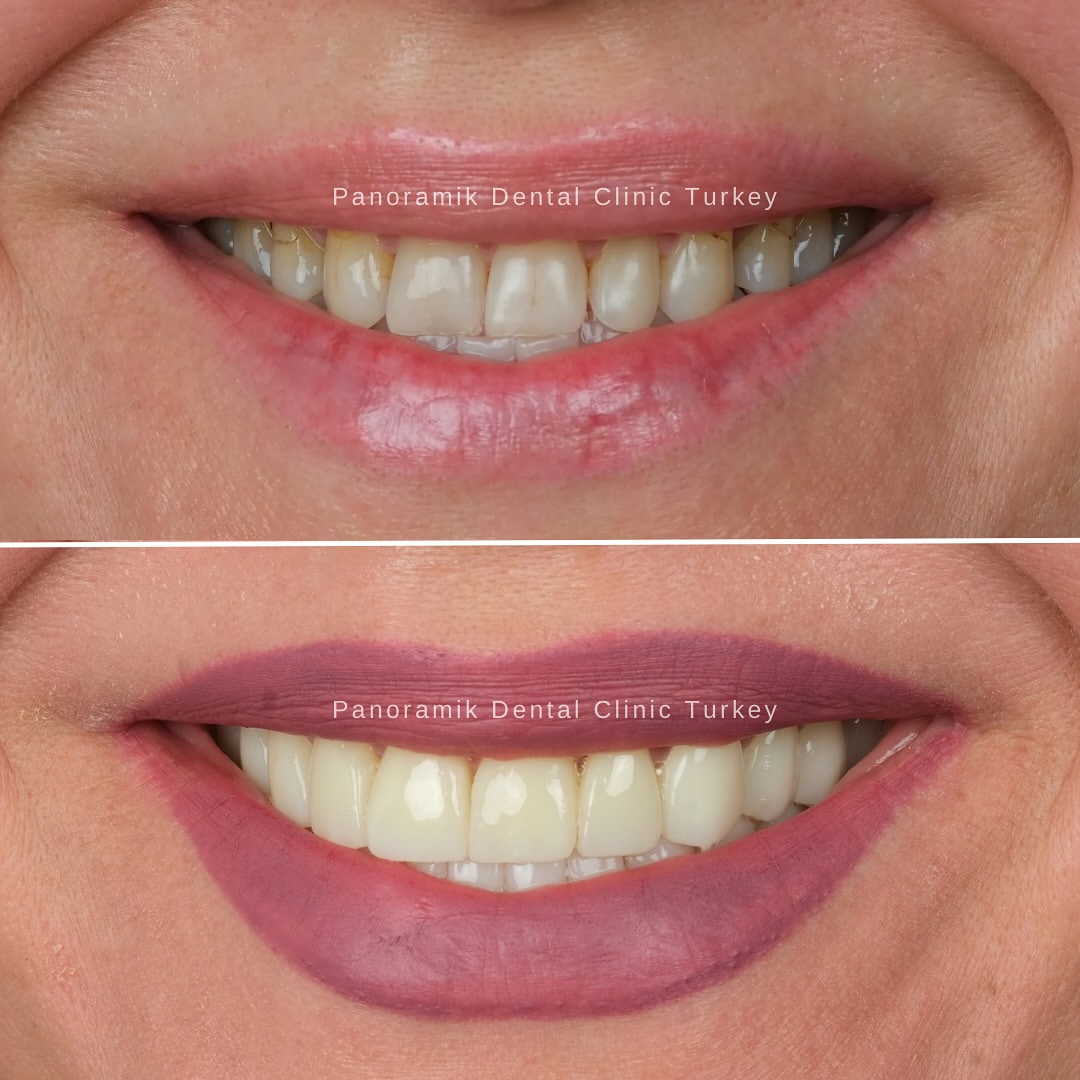
A new smile does not have to be bright white: shade and shape can be kept natural.
6. No plan for aftercare
Ceramic restorations need checks over the years. If a clinic offers no follow-up or guarantee, small issues can become bigger ones.
How We Plan Turkey Teeth Treatment at Our Antalya Clinic
Good results start long before any tooth is touched. At Panoramik Dental Clinic in Antalya, treatment planning typically includes:
- A full clinical examination, with imaging when clinically necessary. A dental CT scan may be recommended when clinically necessary to assess bone levels, root anatomy or other findings that require 3D imaging for diagnosis or treatment planning.
- Treating the foundation first. Gum treatment, fillings, cleaning or root canal therapy are completed before cosmetic restorations.
- Choosing the least invasive option. If your teeth are healthy, we discuss options such as composite bonding in Antalya, teeth whitening or minimal-preparation E-Max veneers before crowns.
- Digital smile design. You see the planned shape and proportions in advance, so the final result is something you have agreed to, not a surprise.
- Temporary restorations and try-ins. These let you check the look, bite and speech before the final restorations are fitted.
- Realistic timelines. The number of days you need to stay in Antalya depends on your treatment. See how many days to stay in Turkey for dental treatment, and if you are still planning your trip, our guide to the best time to visit Antalya for dental treatment. For what a typical trip looks like, read our day-by-day guide to dental tourism in Antalya.
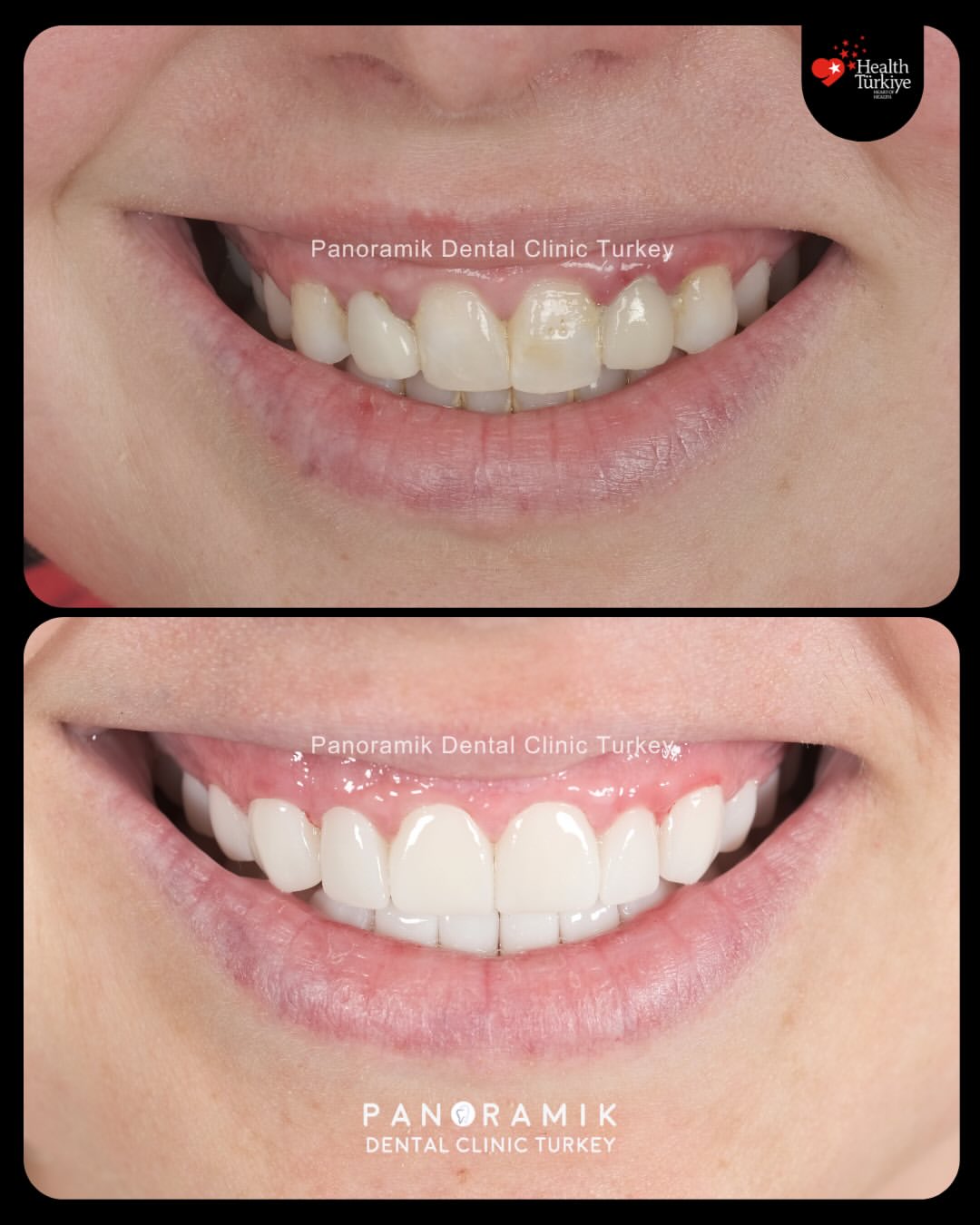
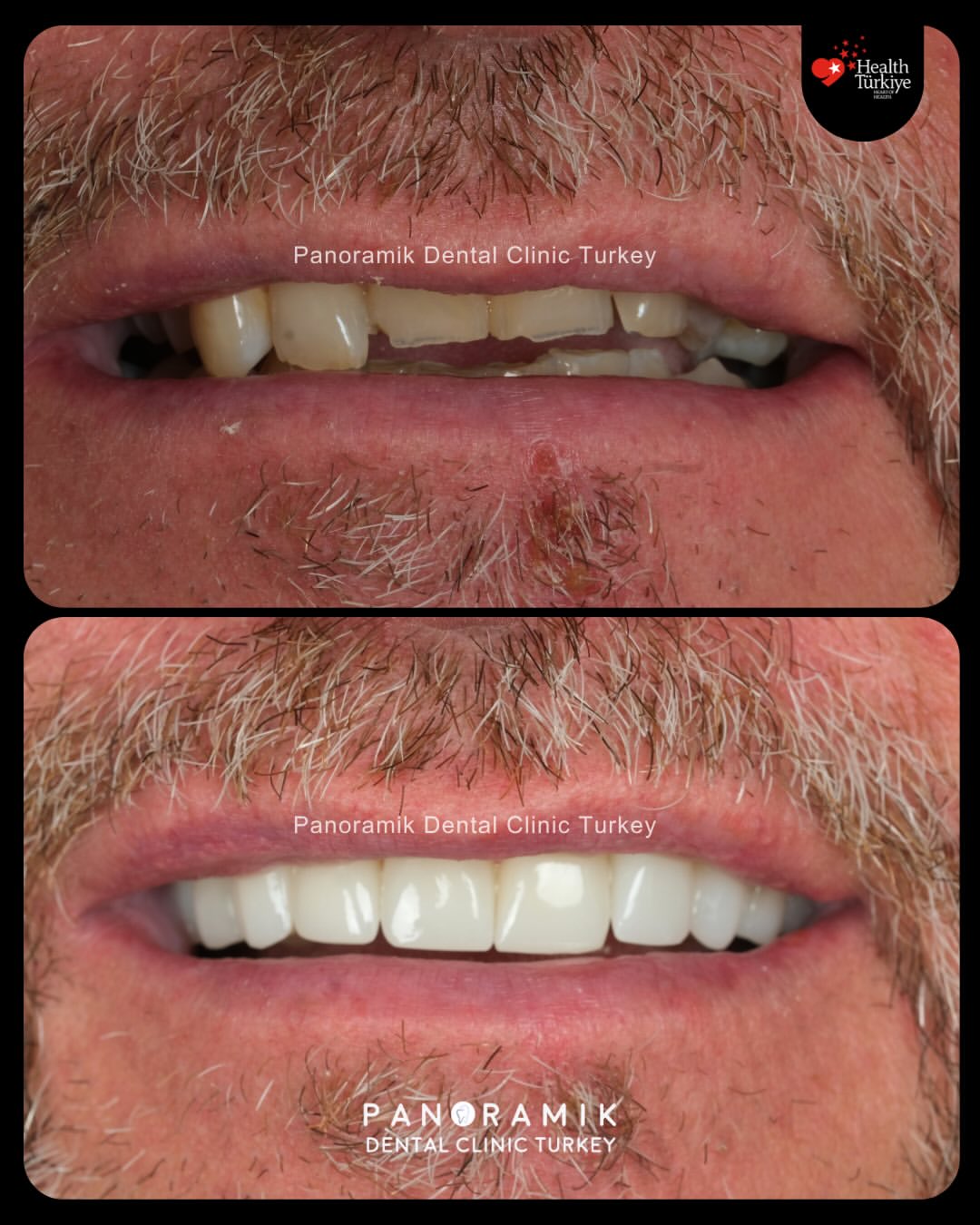
Results planned around each patient's own teeth, bite and face.
What Do Turkey Teeth Look Like 5–10 Years Later?
Well-planned ceramic restorations can last many years with good care, although their lifespan varies from person to person and they may eventually need repair or replacement. Long-term results depend on:
- How much healthy tooth was preserved at the start
- The quality of the material and the dental laboratory
- How well the bite was balanced
- Your oral hygiene and regular check-ups
- Habits such as teeth grinding, smoking or heavy coffee and red wine consumption
Common long-term issues include gum recession around crown edges, chipping, staining at the margins of composite work, and sensitivity. Most of these are manageable when caught early. If you grind your teeth, a night guard is one of the best ways to protect your investment.
For more detail, see how long dental veneers last.
Red Flags When Choosing a Dental Clinic in Antalya
Antalya has many dental clinics, and quality varies. Be cautious if a clinic:
- Gives a fixed price and treatment plan without seeing X-rays or examining you
- Recommends a full set of crowns for teeth you describe as healthy
- Promises a complete smile makeover in an unrealistically short time regardless of your case
- Cannot tell you which materials, brands or laboratory they use
- Avoids questions about the dentist's qualifications
- Offers no written treatment plan, warranty or aftercare contact
- Holds no official health tourism authorisation
- Uses only heavily filtered before-and-after photos with no real patient reviews
Our guide on how to choose the best dental clinic in Turkey covers this in more depth.
Questions to Ask Before You Book
Take this list into your consultation:
- Am I getting veneers or crowns, and why?
- How much of my natural tooth will be removed?
- Are there less invasive options for my case?
- Do I need any treatment (gums, fillings, root canals) before cosmetic work?
- Which material will you use (E-Max, zirconia, porcelain, composite) and why?
- Will I see a digital design or temporaries before the final result?
- How many visits and days in Antalya will I need?
- What warranty do you offer, and what happens if something breaks after I go home?
- Who will carry out my treatment, and what are their qualifications?
A good clinic will welcome these questions.
The Bottom Line
"Turkey teeth" does not have to mean over-treated, artificial-looking teeth. The difference lies in honest diagnosis, choosing the least invasive option that achieves your goal, and taking the time to plan properly.
In every surgical or interventional procedure, results can vary from person to person. It is recommended that you get a detailed opinion from your doctor before the procedure.
If you are considering a smile makeover in Antalya, send us your photos and X-rays for a free assessment. Our team will explain which options suit your teeth and why, so you can make an informed decision before you travel.
Contact us on WhatsApp | Book a consultation in Antalya
Frequently Asked Questions
Dental treatment in Antalya can be safe and high quality when carried out by qualified dentists with proper diagnostics, appropriate materials and realistic timelines. Problems are usually linked to over-treatment or rushed planning rather than the destination itself.
It depends on the clinic and the case. The term is used for both. Always ask which you are being offered and why.
Crowns and conventional veneers are generally not reversible because natural tooth structure has been removed. Composite bonding and no-prep veneers are more conservative options.
The price depends on the material, the number of teeth and any preparatory treatment needed. You can view our current price list or request a personalised quote after sending your X-rays.
Contact your clinic first. Many issues can be assessed from photos. Our guide on what to do if your veneer falls off explains the immediate steps.
Yes. Shade, shape and translucency can all be customised. A natural result is often the better choice for long-term satisfaction.