





Most people who message a dental clinic in Antalya don't start with "how much?" They start with something closer to "what will actually happen to me once I land?"
That's a fair question. You're flying to another country, handing your teeth to someone you've only met over WhatsApp, and trying to fit it all around a week off work. Price matters, but uncertainty is what keeps people from booking.
So this guide walks you through the whole thing day by day, from the airport pickup to the flight home. It also covers the part many clinic websites skip: the timeline for implants is very different from the timeline for veneers and crowns, and you should know that before you book flights.
Why Antalya Has Become a Favourite for Dental Patients
Istanbul still gets more dental tourists overall, but Antalya has carved out its own place, and the reasons are mostly practical.
The airport is easy. Antalya Airport (AYT) has direct flights from most UK airports and a long list of European cities, many of them year-round. The drive to the main areas, Lara, Konyaaltı and the old town, usually takes 20 to 40 minutes. Compare that with an hour or more in Istanbul traffic.
Recovery days feel like a holiday. There are gaps in any treatment plan when you're simply waiting for the lab. In Antalya you spend those days walking along a seafront promenade, not sitting in a hotel room next to a motorway.
The infrastructure is built for international patients. Hotels, transfers, translators and English-speaking staff are standard rather than an extra.
The savings are real. Depending on the treatment, patients from the UK and Western Europe typically pay 50–70% less than at home. That figure includes flights and hotel, which we'll get to.
None of that makes every clinic good, of course. More on how to judge a clinic further down.
First, the Honest Bit: Two Very Different Timelines
Before the day-by-day plan, here's the thing to understand.
Veneers, crowns and bridges on your natural teeth can usually be finished in one trip of about 5–7 days. The lab work is quick, and modern clinics often have digital scanners and milling units on site.
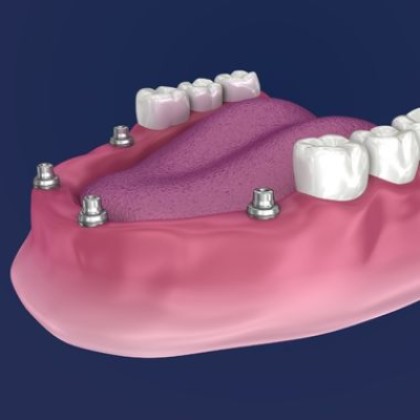
Dental implants need two trips in almost every case. The implant (the titanium screw) goes in on trip one. Then your jawbone needs roughly 3 to 6 months to fuse with it. That process is called osseointegration, and it can't be rushed. You come back for the permanent crowns or bridge on trip two.
Some clinics advertise "implants in 5 days." Usually that means temporary teeth fitted on the implants, or a specific immediate-loading protocol that suits only some patients. Ask exactly what you'll be leaving with on day five.
With that in mind, here's what a typical first trip looks like.
Day-by-Day: What Actually Happens in Antalya
Day 1: Arrival, Hotel, and the Consultation
A driver meets you at arrivals holding a sign with your name, which is a surprisingly comforting thing to see after a four-hour flight. You're taken to your hotel to drop your bags.
Depending on your arrival time, the consultation happens that afternoon or the next morning. Expect:
- A 3D CT scan (CBCT) and digital X-rays. These show bone volume, nerve positions and the roots of your existing teeth. Any clinic that wants to place implants without a 3D scan is a red flag.
- An examination with the dentist who will actually treat you. Not just a coordinator.
- Smile design. For veneers and crowns, many clinics use digital smile design software to show you a preview of the shape and shade. Some will also make a mock-up you can try on in your mouth.
- A final treatment plan and price. This is where the online estimate becomes a firm quote. It can change slightly if the scan shows something photos couldn't, like a cracked root or gum disease that needs treating first.
Take your time here. Ask questions. If something feels rushed, say so.
Every smile has a story. We as Panoramik Dental clinic take a closer look to understand yours.
Day 2: The Main Procedure
This is the long day. Eat a proper breakfast unless told otherwise.
If you're having veneers or crowns: your teeth are prepared (reshaped) under local anaesthetic, then a digital scan or impression is sent to the lab. You leave with temporary teeth. They look fine for a few days but aren't built to last.
If you're having implants: the implants are placed under local anaesthetic, with sedation available if you're nervous. A single implant can take under an hour. Full-arch cases take longer. If you need extractions, bone grafting or a sinus lift, these may happen the same day or change your schedule. Your surgeon will tell you which.
Afterwards you'll get painkillers, antibiotics if needed, a mouthwash and written aftercare instructions. Most people describe the evening as "sore but manageable." Ice packs help with swelling.
Days 3–4: Healing and Seeing a Bit of Antalya
These are your rest days. The lab is working and your mouth is settling down.
What to eat: soft, lukewarm food. Lentil soup (mercimek çorbası) is everywhere in Antalya and perfect for this. Yoghurt, mashed potatoes, menemen (Turkish scrambled eggs with tomato), soft fish and the famous Turkish rice pudding all work well. Skip anything crunchy, chewy, very hot or very spicy.
What to avoid: alcohol and smoking, especially after implant surgery. Both slow healing noticeably. Also avoid the hamam and sauna, and heavy exercise.
Gentle things to do:
- Walk through Kaleiçi, the old town, with its narrow streets, Ottoman houses and Hadrian's Gate. Go in the late afternoon when it's cooler.
- Visit the Antalya Museum, one of the best archaeological museums in Turkey and nicely air-conditioned.
- See the Lower Düden Waterfall, where the river drops straight off the cliffs into the sea. It's an easy trip from Lara.
- Sit by the Konyaaltı seafront and watch the sunset over the Taurus Mountains.
One honest tip: Antalya summers are hot. If you have the flexibility, spring (April–June) and autumn (September–November) are much more comfortable for recovery. You'll also find better hotel prices. Our guide to the best time to visit Antalya for dental treatments goes into more detail.
Day 5: Try-In and Final Fitting
For veneers and crowns, this is the exciting day. Your permanent zirconia or E-max restorations are tried in first. Check the colour in natural light, look at the shape, and tell the dentist what you think before anything is cemented. Once you're happy, they're bonded in place and your bite is adjusted so nothing hits too early when you close.
It's normal for your new teeth to feel slightly "big" or strange for a few days. Your tongue and lips adjust surprisingly fast.
For implants, day five is usually a check-up. The dentist looks at healing, may remove stitches and makes sure your temporary teeth fit comfortably. Your permanent teeth come on the second visit.
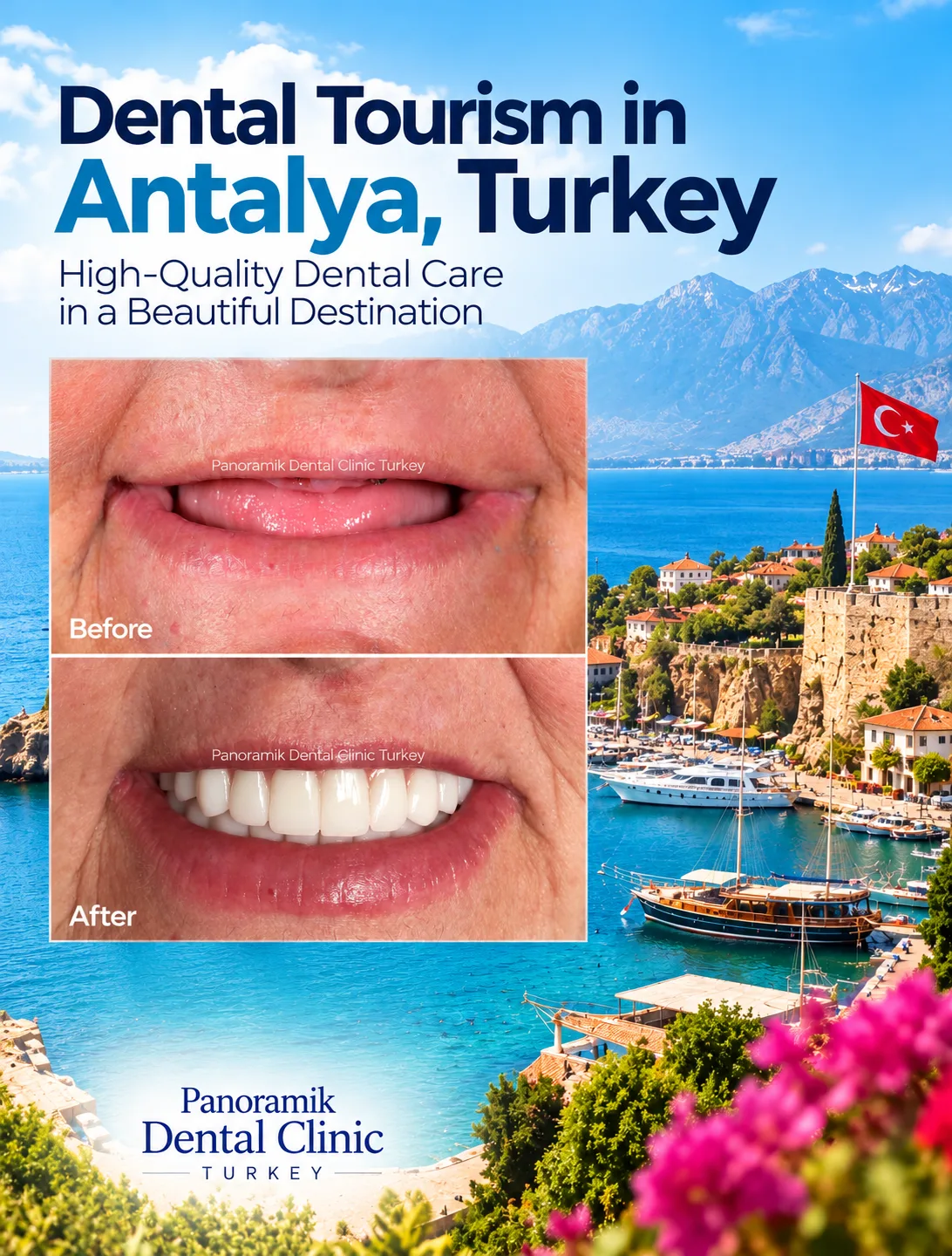
There’s nothing more rewarding than seeing a patient smile with confidence again.
This transformation was not only about dental treatment, but about restoring comfort and confidence.
Every smile tells a story — and we’re proud to be part of this one.
Day 6: Final Check and Flight Home
A quick last appointment covers your bite, any small adjustments, your aftercare plan and your paperwork. You should leave with:
- Your X-rays and CT scan (digitally)
- A written record of what was done, including implant brand and size if relevant
- Your warranty document
- A contact name for follow-up
Then it's back to the airport. Flying a few days after routine dental work is generally fine. If you had a sinus lift or extensive bone grafting, your surgeon may ask you to wait longer, so check before you book your return flight.
Quick summary: veneers and crowns usually take 5–7 days in one trip. Implants take about 5–7 days on the first trip, then 3–6 months of healing at home, then 4–7 days on the second trip.
How Much Does Dental Treatment in Antalya Cost?
Prices vary with materials, implant brand, the dentist's experience and how complex your case is. As a rough 2026 guide for patients comparing with the UK:
| Treatment | Typical UK private price | Panoramik Dental Clinic price |
|---|---|---|
| Single implant with crown | £2,000–£3,500 | £410–£1,050 |
| Zirconia crown (per tooth) | £600–£1,200 | See the detailed clinic prices below |
| E-max veneer (per tooth) | £600–£1,200 | See the detailed clinic prices below |
| Full-arch implant solution (All-on-4/6) | £10,000–£18,000+ per arch | £2,500–£7,750 per arch |
The UK figures are broad market ranges. The Antalya figures are Panoramik Dental Clinic's average published prices, not quotes: the single implant range runs from a domestic implant with a porcelain-fused-to-metal crown to a Straumann Roxolid implant with an E-max crown, abutment included. Your price depends on your scan and treatment plan.
Even with flights (often £150–£400 return from the UK outside peak season) and the second trip for implants, the total usually comes in well below UK prices. For the full breakdown, see our price list.
Panoramik Dental Clinic Prices
The figures below are Panoramik Dental Clinic's average published prices in GBP. An implant tooth is priced in three parts: the implant, the abutment and the crown.
| Treatment | Average Price |
|---|---|
| Implant (domestic brand) | £270 |
| Implant – Megagen ST | £320 |
| Implant – Medentika (by Straumann) | £450 |
| Implant – Nobel Biocare | £550 |
| Implant – Astra Tech | £650 |
| Implant – Straumann Roxolid | £750 |
| Abutment | £50–£129 |
| Porcelain-fused-to-metal crown | £90 |
| Zirconia crown | £140 |
| E-max veneer or crown | £170 |
| All-on-4 (per arch) | £2,500–£6,000 |
| All-on-6 (per arch) | £3,150–£7,750 |
| Sinus lift (closed technique) | £200 |
| Sinus lift (open technique) | £400 |
| Bone graft (2 cc) with membrane | £200 |
What's Usually Included in an Antalya Dental Package
A good package normally covers:
- Airport–hotel–clinic transfers for every appointment
- Hotel accommodation, often 4- or 5-star, for the treatment days
- Consultation, CT scan and X-rays
- Local anaesthetic and prescribed medication
- A translator or English-speaking coordinator
- Temporary teeth where needed
Usually not included: flights, meals, sedation (sometimes extra), bone grafts or sinus lifts if they weren't in the original plan, and extra nights if you choose to stay longer.
How to Avoid Hidden Costs
Ask for the quote in writing and itemised: each tooth, each implant, the brand, the crown material. Then ask directly: "What could make this price go up once you see my scan?" A trustworthy clinic will answer that plainly.
A Word About "Turkey Teeth"
You've probably seen the headlines. Some patients came home with healthy teeth heavily filed down for crowns when thin veneers, or even just whitening, would have done the job.
It's a fair worry, and the answer isn't to avoid Turkey. It's to choose carefully:
- Ask whether you need veneers or crowns, and why. Veneers keep much more of your natural tooth.
- Ask how much tooth structure will be removed.
- Be wary of anyone recommending a full set of 20 crowns on healthy teeth without a clear reason.
- Look for real before-and-after photos and reviews from patients who are a year or more down the line.
A good dentist will sometimes talk you out of treatment. That's a good sign. For a fuller checklist, see how to choose the best dental clinic in Turkey.
Aftercare Once You're Home
How long do temporary teeth last?
For veneers and crowns, temporaries are only meant to last days to a couple of weeks, so they're replaced before you leave. For implants, you may wear a temporary bridge or denture for the whole 3–6 month healing period. It works, but treat it gently. Avoid biting directly into hard things like apples or crusty bread.
Looking after your new teeth
Brush twice a day, use floss or interdental brushes (a water flosser is great around implants), and keep up regular check-ups with a local dentist. Zirconia and E-max are strong, but they're not indestructible. If you grind your teeth at night, ask about a night guard. It's cheap insurance.
Warranties and remote follow-up
Most reputable clinics offer written warranties. Implant brands often carry long or lifetime guarantees on the implant itself, and crowns and veneers commonly carry 5–10 years. Read the conditions, though. Warranties usually require regular check-ups and may not cover damage from accidents or untreated grinding.
Good clinics also follow up remotely. You send photos or X-rays from your local dentist, and they advise you. Ask beforehand what happens if something goes wrong: who pays for the flight if you need to come back, and is there a partner dentist in your country?
Patient Review
Your journey to a confident smile starts at Panoramik Dental Clinic in Antalya, Turkey
At panoramik dental clinic, every smile is a success story. Here is a new example of this!
In every surgical or interventional procedure, results can vary from person to person. It is recommended that you get a detailed opinion from your doctor before the procedure.
Final Thoughts
Dental treatment in Antalya can be a genuinely good experience: modern clinics, real savings, and a few days of sunshine while the lab finishes your teeth. What makes the difference is going in with the right expectations: knowing your treatment's real timeline, getting an itemised quote, and choosing a dentist who explains rather than sells.
If you're considering treatment, start by sending your recent X-rays or a few clear photos of your smile for a free assessment through our contact page. You'll get a personalised plan, a realistic timeline and a transparent quote, so you can decide calmly, with all the facts in front of you.
Frequently Asked Questions
Plan for about 5–7 days on your first visit for implant placement, then a second trip of around 4–7 days after 3–6 months for your permanent teeth.
Yes. Veneers and crowns are usually completed in a single visit of 5–7 days.
For most patients, flying a few days after implant placement is fine. If you've had a sinus lift, your surgeon may advise waiting longer.
After veneers or crowns, usually yes. After implant surgery, most dentists suggest waiting a few days until the wounds have started to close. Ask at your check-up.
Contact your clinic first with photos. Reputable clinics will assess remotely, work with a local dentist, or arrange a return visit under warranty.