






Computed tomography (CT) in dentistry is a three-dimensional image of the teeth or the entire dento-mandibular system. Unlike X-rays, CT scans show the teeth from all sides. Cone beam CT scans of the teeth have much less radiation than a regular CT scan that is done in a hospital, but it does contain more x-rays than a regular x-ray. Therefore, dentists do not recommend resorting to CT scans very often. You should also refrain from a CT scan if you are pregnant. Before starting the procedure, jewellery and other metal objects should be removed from the patient's head, face and neck. Since metal does not allow X-rays to pass behind the metal frame and the examination will not show all details accurately.

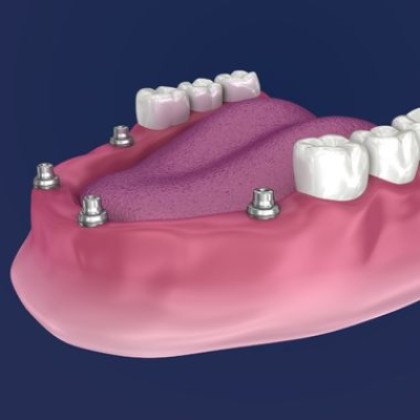
Computed tomography is also used before dental implants.
Because dental implants come in different lengths and widths, the dentist must use 3D CT images with absolute clarity and accuracy. Also with the help of tomography, it is possible to find out information about the volume and shape of the bone tissue, readiness of the bone for implantation, access to the bone for sinus lift and so on.
Thus, we can say that today CT of the upper and lower jaw is the most accurate type of diagnosis in dentistry.
You can read more about our dental treatments or see our current prices on our price list.
Frequently Asked Questions
A dental CT scan is a three-dimensional image of the teeth or the entire dento-mandibular system. Unlike a standard X-ray, it shows the teeth from all sides.
A cone beam CT scan uses much less radiation than a regular hospital CT scan, but more than a regular X-ray. This is why dentists do not recommend having CT scans very often.
You should avoid a CT scan if you are pregnant. Tell your dentist before your appointment if you are or may be pregnant.
It shows the jawbone in three dimensions, which helps your dentist plan dental implants accurately.