




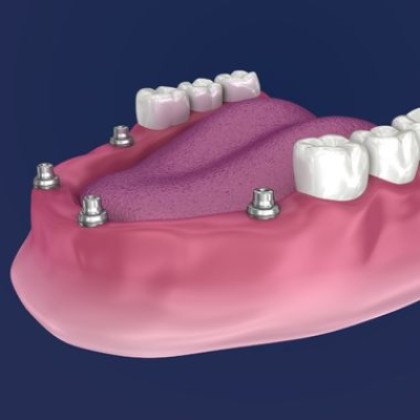


If you've been told you have gum disease and you're also thinking about dental implants, you've probably wondered whether the two can go together. It's one of the most common questions we hear from patients planning treatment in Antalya, and it's a fair one. Gum disease is often the reason people lose teeth in the first place, so it makes sense to worry that it could get in the way of replacing them.
The short answer is yes, many people with a history of gum disease can get dental implants. But there's an important condition: the gum disease has to be treated and brought under control first. Placing an implant into an infected mouth is like building a house on soft, unstable ground. It might stand for a while, but problems are likely to follow.
Below, we'll explain why gum disease matters so much for implants, what treatment looks like before surgery, and how you can plan everything if you're travelling to Turkey for your dental work.
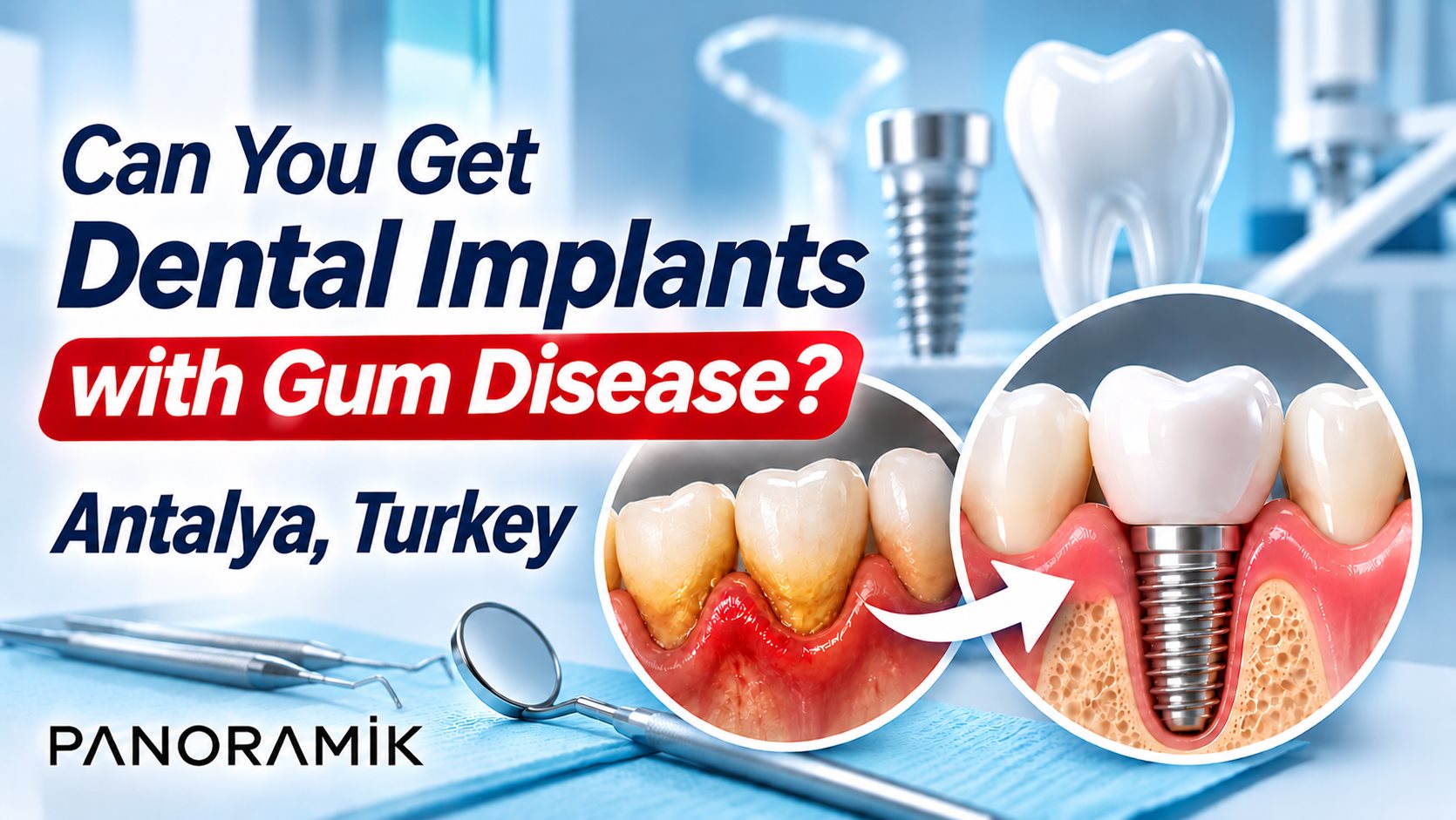
What Is Gum Disease, Exactly?
Gum disease, also called periodontal disease, is a bacterial infection of the tissues that hold your teeth in place. It usually starts quietly and gets worse over time.
The early stage is called gingivitis. Your gums may look red, feel tender or bleed when you brush. At this point, the damage is usually reversible with a professional cleaning and better daily care at home.
If gingivitis isn't treated, it can turn into periodontitis. Here, the infection moves deeper, below the gumline. Pockets form between the gums and teeth, bacteria collect inside them, and the bone that supports your teeth slowly starts to break down. Teeth can become loose, shift position or eventually fall out.
Many patients who come to us for implants have already lost one or more teeth to periodontitis, so the topic comes up in almost every first consultation.
Why Gum Disease Matters for Dental Implants
A dental implant is a small titanium or zirconia post placed into the jawbone. Over a few months, the bone grows around it and holds it firmly in place, a process known as osseointegration. Once that happens, a crown, bridge or full-arch restoration is attached on top.
For this to work well, two things are needed: healthy gums around the implant and enough good-quality bone to hold it. Active gum disease threatens both.
Bacteria don't care whether they're sitting around a natural tooth or an implant. If the infection is still active when an implant goes in, the same bacteria can attack the tissue around the new post. This condition is called peri-implantitis. It causes inflammation, bone loss around the implant and, in more advanced cases, the implant can loosen and fail.
Research has consistently shown that people with a history of periodontitis have a higher risk of peri-implantitis than people who have never had gum disease. That doesn't mean implants won't work for you. It simply means preparation and long-term care matter more in your case.
Signs You May Have Gum Disease
Some people don't realise they have gum disease until a dentist points it out. Common signs include:
- Gums that bleed when you brush or floss
- Red, swollen or tender gums
- Persistent bad breath or a bad taste in your mouth
- Gums that seem to be pulling away from your teeth (receding gums)
- Teeth that feel loose or have started to move
- Pain when chewing
- Pus between your teeth and gums
If any of these sound familiar, mention them during your consultation. A proper examination will show exactly where you stand.
The Process: From Gum Disease to Dental Implants
Every patient is different, but most treatment plans follow a similar path.
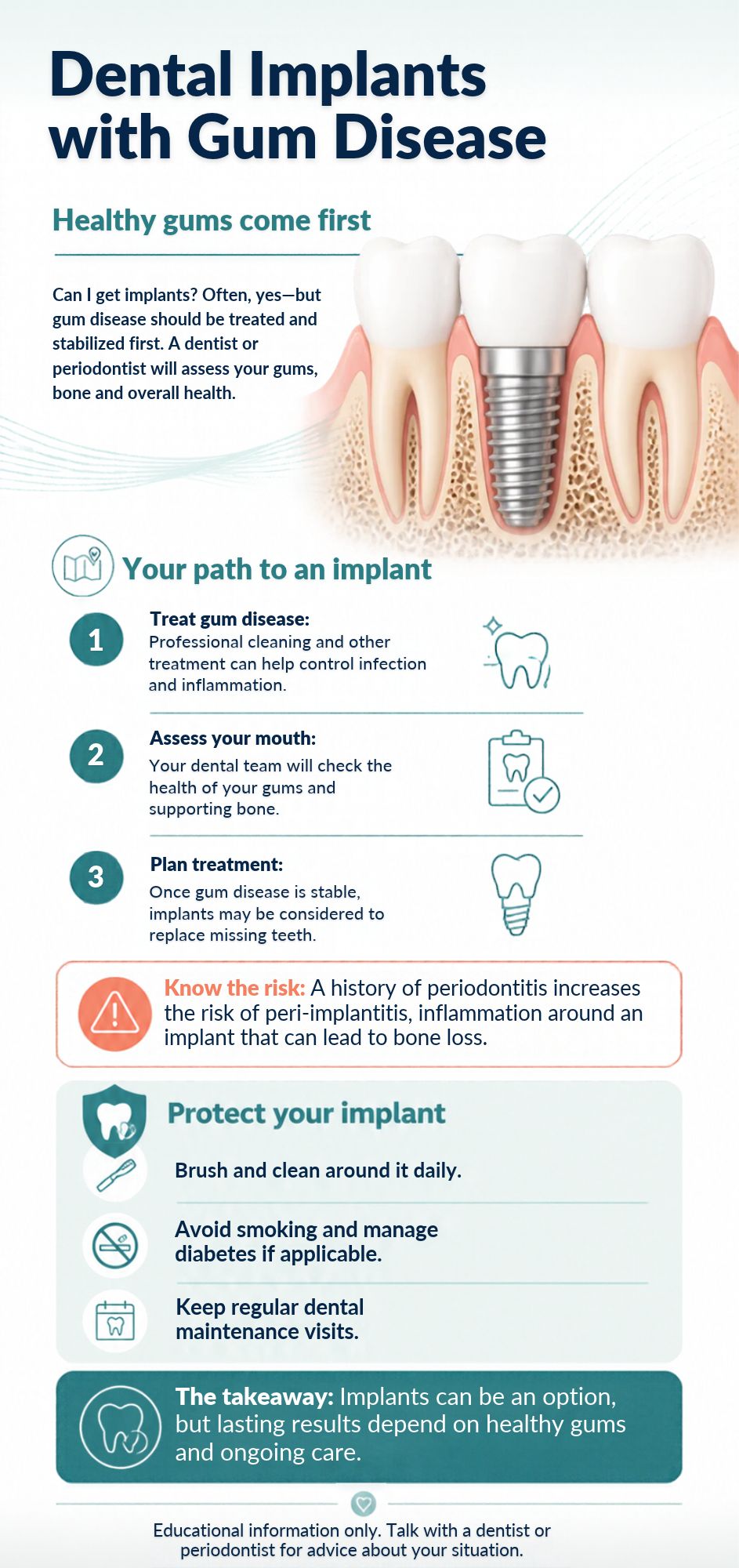
1. A Thorough Examination and 3D Scan
Before anything else, your dentist needs to see the full picture. This usually involves a clinical exam, measuring the depth of the gum pockets and a 3D CT scan of your jaw. The scan shows how much bone you have, where it has been lost and whether there are any hidden infections.
2. Treating the Gum Disease
The next step is getting the infection under control. Depending on how advanced it is, this may include:
- Professional deep cleaning to remove plaque and tartar above and below the gumline
- Scaling and root planing, which cleans the root surfaces and helps the gums reattach
- Antibacterial rinses or, in some cases, antibiotics
- Removing teeth that are too badly damaged to save
- Gum surgery for deeper pockets that don't respond to cleaning alone
3. Giving Your Gums Time to Heal
After periodontal treatment, the gums need time to settle. Your dentist will usually re-check the gum pockets and bleeding after a few weeks to make sure the inflammation has calmed down. Only when the gums are stable does it make sense to move forward with implants.
4. Rebuilding Bone If Needed
Long-term gum disease often leaves behind bone loss. If there isn't enough bone to support an implant, a bone graft may be recommended. In the upper jaw, a sinus lift is sometimes needed as well. In some cases this can be done at the same time as implant placement. In others, the graft needs a few months to heal first.
5. Placing the Implants
Once the gums are healthy and there's enough bone, the implants can be placed. For patients who have lost most or all of their teeth to gum disease, full-arch solutions like All-on-4 or All-on-6 are often a good option, since they're designed to work with the bone that's available.
6. Long-Term Maintenance
This is the part people tend to underestimate. If you've had gum disease before, you're more likely to have it again. Regular check-ups, professional cleanings and good brushing and flossing habits are what keep your implants healthy for years to come.
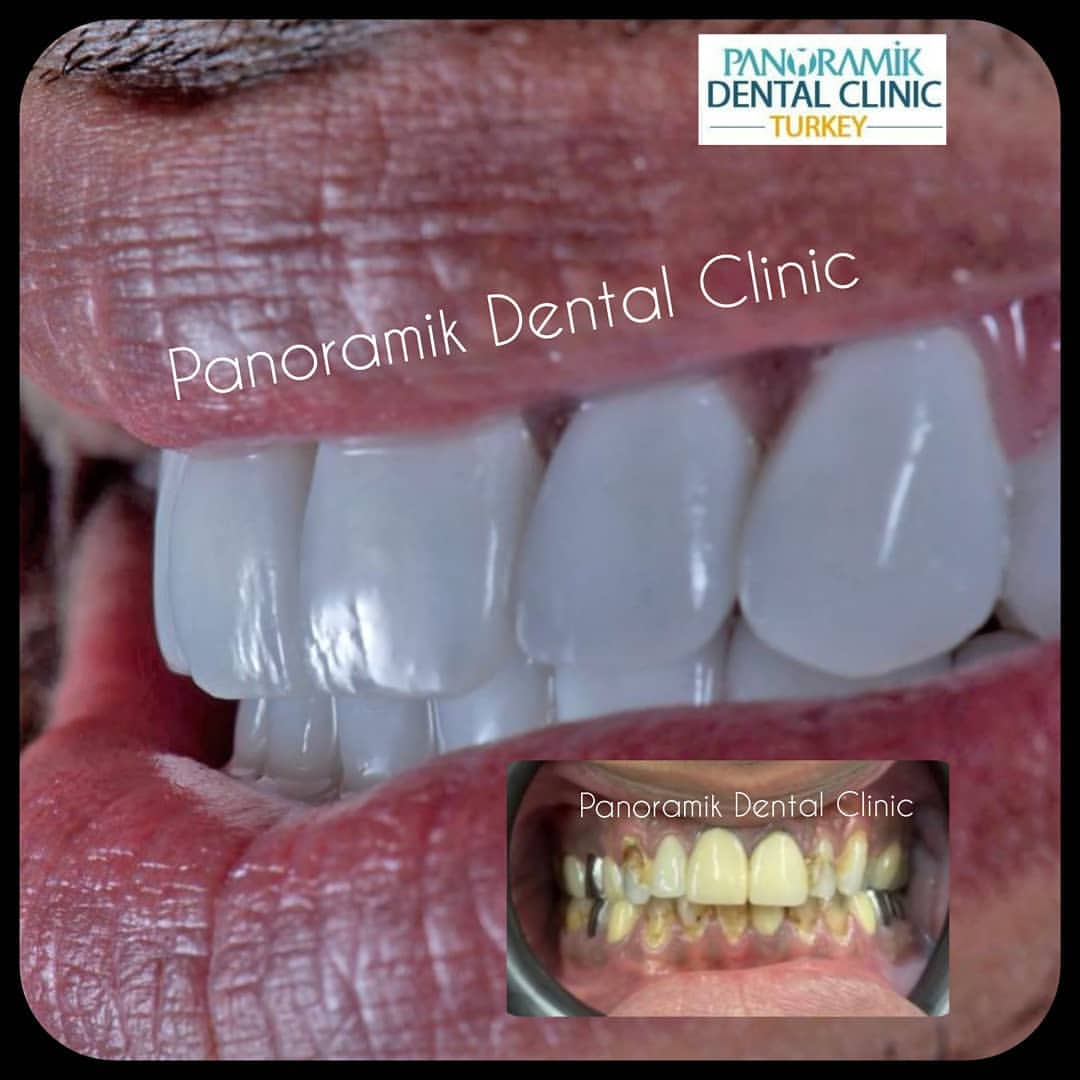
Can Implants Be Placed the Same Day Teeth Are Removed?
Sometimes, yes. Immediate implant placement after an extraction is possible in selected cases, even for patients with a history of gum disease. The key is that the area must be free of active infection and there must be enough stable bone to hold the implant firmly. Our page on same day implants explains how this works.
If there's an active infection or significant bone loss around the tooth being removed, your dentist will usually recommend waiting. It might feel slower, but it gives the implant a much better chance of lasting.
Who Is a Good Candidate After Gum Disease?
You're likely to be a good candidate for implants if:
- Your gum disease has been treated and is now stable
- You have enough bone, or can have a bone graft
- You don't smoke, or you're willing to stop or cut down
- Any health conditions such as diabetes are well controlled
- You're committed to keeping up with home care and check-ups
Smoking and poorly controlled diabetes deserve a special mention. Both slow down healing and raise the risk of gum disease coming back around the implants. If either applies to you, be honest with your dentist so they can plan your treatment safely. Our article on smoking after implant surgery explains the risks in more detail.
How to Lower the Risk of Problems Around Your Implants
Having gum disease in the past doesn't mean your implants are doomed. A few simple habits make a real difference:
- Brush twice a day with a soft toothbrush and pay close attention to the gumline
- Clean between your teeth and implants every day with floss, interdental brushes or a water flosser
- See your dentist for professional cleaning, usually every three to six months
- Avoid smoking, especially during the healing period
- Watch for early warning signs such as bleeding, swelling or soreness around an implant, and get them checked quickly
Our guide to the signs of a failed implant explains which symptoms need prompt attention.
Getting Dental Implants with Gum Disease in Antalya, Turkey
Many of our patients travel to Antalya from the UK, Europe and beyond. If you have gum disease, your treatment plan may need a little more planning, but it's very manageable.
Your treatment plan starts with a detailed examination and assessment of your gums and supporting bone. The first stage focuses on treating gum disease and reassessing the response before planning implant placement. If you need bone grafting, your dentist will explain whether it can be combined with implant surgery or needs a separate healing stage. Permanent teeth are fitted after the implants have healed sufficiently. The number of visits and the time between them depend on your gum health, any grafting and your healing progress; advanced gum disease may require additional visits rather than a fixed two-trip plan. Our guide to how many days you need to stay in Turkey can help you plan each trip.
Sending recent X-rays or photos before you travel helps our team give you a more accurate plan and timeline, so you can book flights and accommodation with confidence.
Frequently Asked Questions
Not right away. Active gum disease needs to be treated first. Placing implants while the infection is still present raises the risk of peri-implantitis and implant failure.
Implants can't decay, but the gums and bone around them can become infected. This is called peri-implantitis, and it's one of the main reasons implants fail. Good oral hygiene and regular check-ups help prevent it.
It depends on how severe the disease was and how well your gums respond. Some patients are ready in a few weeks, while others need several months, especially if bone grafting is involved.
Not always, but it's common for people with long-standing gum disease. A 3D CT scan will show whether you have enough bone for implants.
For many people, yes. Implants feel more natural, don't move when you eat or talk and help preserve the jawbone. That said, the best choice depends on your bone, your health and your budget, so it's worth discussing both options with your dentist. Our comparison of dental implants vs dentures covers the differences.
Final Thoughts
Gum disease doesn't automatically close the door on dental implants. What it does mean is that your treatment needs to be done in the right order: treat the infection, rebuild what's been lost, then place the implants and take good care of them afterwards.
If you're considering dental implants in Antalya and you're worried about your gums, the best first step is an honest assessment. Contact us at Panoramik Dental Clinic to share your X-rays or book a consultation, and our team will explain exactly what your options are.
Contact us on WhatsApp | Book a consultation in Antalya
Written by: Panoramik Dental Clinic. Updated: .
Dental reviewer: Hüseyin Gürel, Dentist, Panoramik Dental Clinic.