




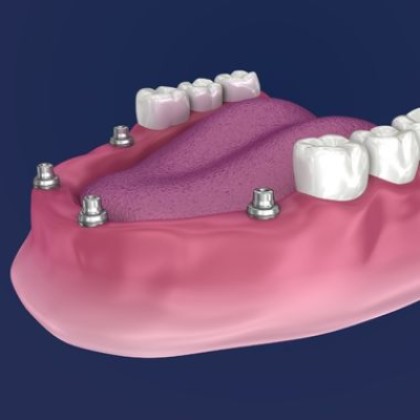


One of the most frequently asked questions we hear from patients seeking fixed teeth after losing all or most of their teeth is: Which is better, All-on-4 or All-on-6? Both treatment options can provide a fixed full-arch solution, with a prosthesis supported by multiple dental implants. The main difference is the number of implants used and how they are positioned in the jaw. Both All-on-4 and All-on-6 may be used in suitable cases for either the upper or lower jaw.
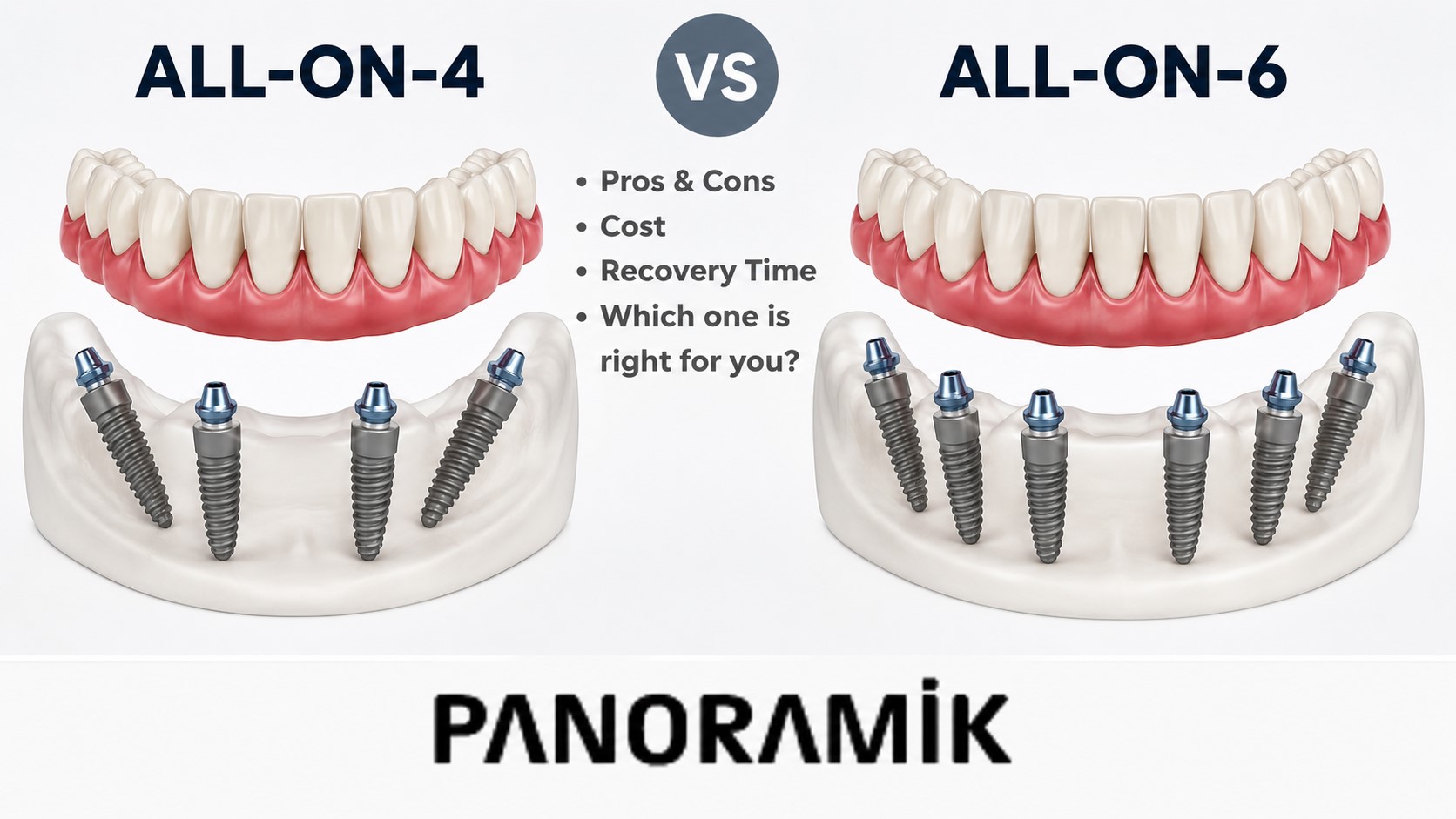
In this article, we compare the two techniques plainly and without exaggeration, drawing on our years of clinical experience. Our goal is to help you make your decision with accurate information.
All-on-4 may be suitable when four implants can be positioned predictably using the available bone. The angled posterior implants can help make efficient use of available bone in selected cases. All-on-6 provides broader support. The right choice depends on evaluating your jawbone with a CT scan.
What is All-on-4 in Antalya, Turkey?
All-on-4 is a full-arch implant treatment that can provide fixed replacement teeth for patients who have lost all or most of their teeth in a single jaw. The two implants in the back region are placed at an angle to make the most efficient use of the existing bone. This approach may reduce the need for additional bone-grafting procedures in selected patients by making efficient use of the available bone. When clinically suitable, temporary fixed teeth may also be attached on the day of implant placement. Immediate loading depends on factors such as primary implant stability, bone quality and the overall treatment plan. For more details, you can check our All-on-4 implant and All on 4 advantages pages.
What is All-on-6 in Antalya, Turkey
All-on-6 is a full-arch implant treatment that uses six dental implants to support a fixed prosthesis in a single jaw. The additional implants provide more support points across the arch and may help distribute functional loads. It may be considered when sufficient bone is available for six implants and when additional implant support is appropriate for the individual treatment plan. Both treatments can provide fixed full-arch implant solutions for patients who have lost all or most of their teeth.
All on 4 vs All on 6: Pros and Cons in Antalya, Turkey
All-on-4 Pros
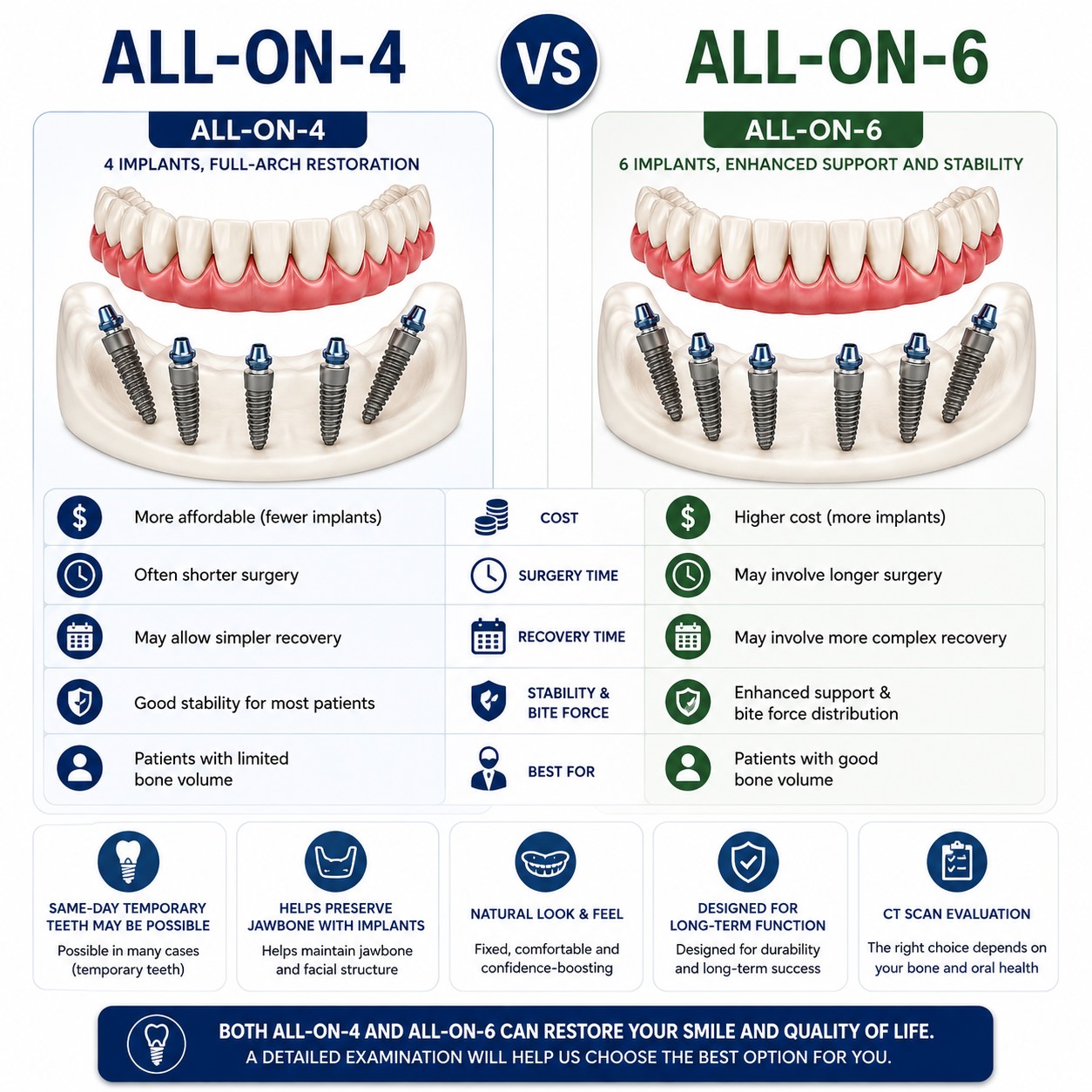
- Fewer implants means a lower upfront cost compared to All-on-6, which matters a lot for patients weighing their budget.
- Using four implants may involve a less extensive surgical procedure in selected cases.
- In selected patients, the angled posterior implants can make efficient use of the available bone and may help reduce the need for additional bone-grafting procedures.
All-on-4 Cons
- Because the arch is supported by four implants, implant positioning, prosthetic design and load distribution are particularly important.
- Not every case is a good fit — if the jawbone is severely compromised, four implants may not be enough to properly anchor the arch long term.
All-on-6 Pros
- Six implants provide additional support points, which may help distribute functional loads across the arch.
- In patients with higher functional demands, additional implants may be considered when the available bone and overall treatment plan support their placement.
- All-on-6 may be considered when sufficient bone is available for additional implants and a wider distribution of support is appropriate.
All-on-6 Cons
- More implants means a higher price tag — this is usually the first thing patients notice when comparing the two.
- Placing six implants may involve a more extensive surgical procedure than placing four, depending on the individual treatment plan.
- Placing six implants requires sufficient bone at the planned implant sites and careful assessment of the surrounding anatomical structures. Additional bone-grafting procedures may be recommended when bone volume is insufficient.
Differences between All-on-4 and All-on-6
Let's compare the two methods in a single table:
| Criterion | All-on-4 | All-on-6 |
|---|---|---|
| Implant number | 4 | 6 |
| Bone requirements | May make better use of available bone in selected cases | Requires sufficient bone at the planned implant sites |
| Support | Fixed full-arch support | Wider distribution of support |
| Bone grafting | May make efficient use of available bone in selected cases and may reduce the need for additional bone-grafting procedures. | Additional procedures may be recommended if bone is insufficient at planned implant sites |
| Cost | Generally lower | Generally higher |
| Treatment complexity | May be less extensive in selected cases | May involve additional implant placement and planning |
Which one is right for you?
The main points the dentist evaluates when deciding are:
- Jawbone volume: The available bone and implant positions are assessed to determine whether four or six implants are appropriate.
- Bite forces: Bite forces and habits such as teeth grinding may influence implant positioning, prosthetic design and the overall treatment plan.
- Oral and periodontal health: The condition of the gums, remaining teeth and supporting bone is important when planning implant treatment.
- Expectations and budget: Both methods can provide fixed full-arch teeth, while the number of implants, treatment complexity and cost may differ.
These points can only be clarified through a clinical examination and CBCT (cone beam computed tomography). A general dental implant treatment plan is created after this evaluation.
All-on-4 vs All-on-6 Cost in Turkey, UK, US and Europe
The cost of All-on-4 and All-on-6 varies depending on the implant brand, prosthetic material, number of arches treated, bone condition and whether additional procedures are required.
Since All-on-6 involves two additional implants and more material, it is generally more costly than All-on-4. However, price alone is not the deciding factor. Placing unnecessarily more implants, as well as leaving insufficient support, are both incorrect approaches. The exact price is given after examination, based on the implant brand, jaw condition, and treatment plan.
Prices vary significantly between countries and clinics depending on implant brand, prosthetic material, treatment complexity and the services included in the package. Dental implant treatment in Turkey is often priced lower than comparable treatment in the UK, US and some Western European countries. The figures below are approximate and are provided for general comparison only.
All-on-4 vs All-on-6 Dental Implant Costs
Approximate costs per arch in GBP (£)
Bars represent the upper end of each approximate price range. Prices are for general comparison only and may vary by clinic, implant brand, prosthetic material and treatment complexity.
Approximate costs per arch in GBP (£); European figures are broad estimates and vary considerably by country.
In conclusion
All-on-4 may be suitable when four implants can be positioned predictably using the available bone. In selected cases, the angled posterior implants can make efficient use of the available bone and may reduce the need for additional bone-grafting procedures. The treatment also involves fewer implants and may have a lower overall cost, depending on the treatment plan.
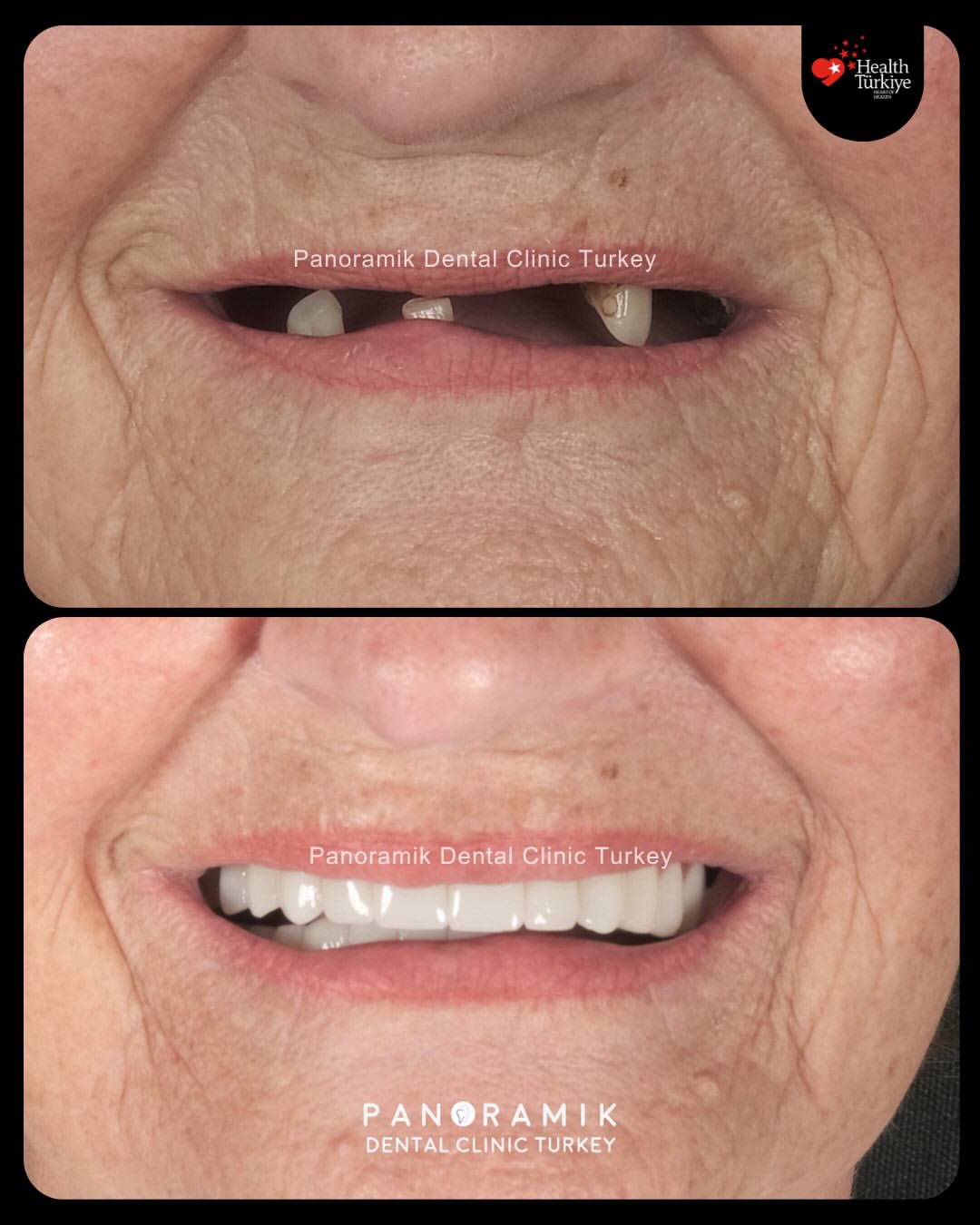
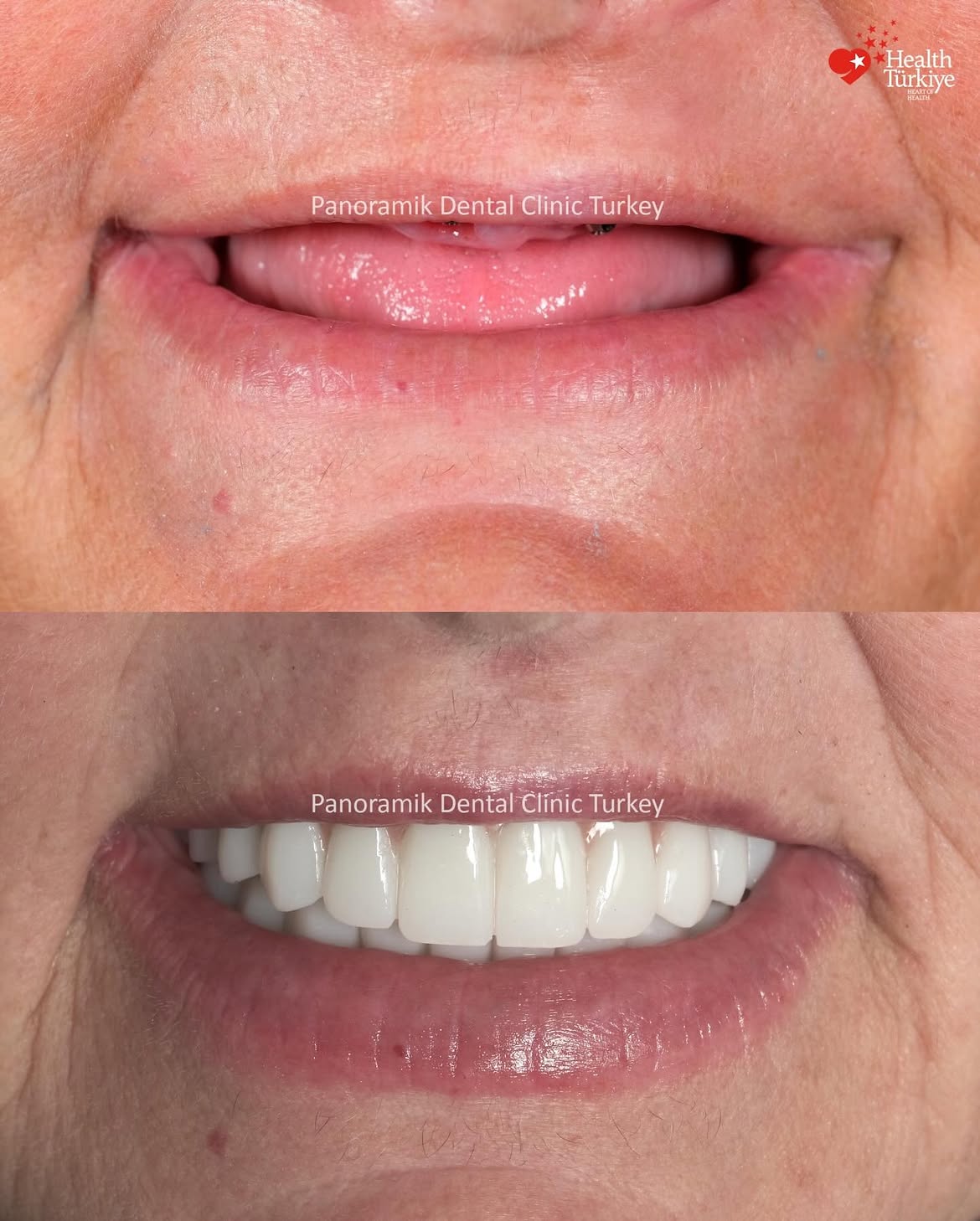
All-on-6 may be considered when there is sufficient healthy bone to support additional implants and when a wider distribution of support is appropriate. The additional implants may help distribute functional loads across the arch, but they do not automatically result in a more durable or successful treatment. Long-term outcomes depend on implant placement, bone and gum health, prosthetic design, bite forces, oral hygiene and regular maintenance.
There is no single superior method between All-on-4 and All-on-6 for every patient. The right option depends on your jawbone condition, bite forces, oral health, treatment goals and overall treatment plan. If you are considering All-on-4 or All-on-6 in Turkey, the most appropriate option can be determined after a clinical examination and CT assessment.
Frequently asked questions about All-on-4 and All-on-6
The main difference is the number of implants: All-on-4 uses 4 implants in a single jaw, while All-on-6 uses 6. The additional implants in All-on-6 provide a wider distribution of support, although the suitability of six implants depends on available bone and overall treatment planning.
There is no single right answer for everyone. All-on-4 may be suitable when four implants can be safely and predictably placed using the available bone. All-on-6 may be considered when there is sufficient bone to support additional implants and a wider distribution of support is appropriate.
All-on-6 requires 6 implants in a single jaw. This is two more than All-on-4, and these implants give the prosthesis a wider base.
All-on-6 may be considered when sufficient bone is available for six implants and additional implant support is appropriate for the patient's anatomy, functional demands and overall treatment plan.
All-on-4 may be suitable for patients who have lost all or most of their teeth and require a fixed full-arch restoration. Suitability depends on the available bone, implant positions, oral health and overall treatment plan. In selected cases, the angled posterior implants can make efficient use of available bone and may reduce the need for additional bone-grafting procedures. A clinical examination and CBCT scan are needed to determine whether All-on-4 is appropriate.
All-on-6 can provide a broader support base, but using six implants does not automatically make the treatment more durable. Long-term outcomes depend on implant placement, bone and gum health, prosthetic design, bite forces, oral hygiene and regular maintenance.
All-on-6 is generally more costly than All-on-4 because it involves two additional implants and more material. The exact price is determined after examination and CT evaluation, based on the treatment plan.
When clinically suitable, temporary fixed teeth may be attached on the same day as implant placement. Whether immediate loading is possible depends on factors such as primary implant stability, bone quality and the treatment plan. The final permanent prosthesis is fitted after the appropriate healing and treatment period.
Bone loss does not automatically rule out All-on-4 or All-on-6. The available bone, implant positions and anatomy need to be assessed with a clinical examination and CT scan. In some cases, additional procedures may be recommended.