






Zirconia crowns offer many advantages, including high strength, durability, biocompatibility and natural-looking aesthetics. However, they also have some disadvantages, such as the need for tooth preparation, limited repair options and a colour that cannot be changed with teeth whitening after placement. Understanding these pros and cons can help patients decide whether zirconia is the right crown material for their needs.
Advantages of Zirconia Crowns
Zirconia crowns are dental restorations made from zirconium oxide material and hold an important place in modern dentistry. The main advantages offered by these crowns are as follows:
Natural-looking aesthetics
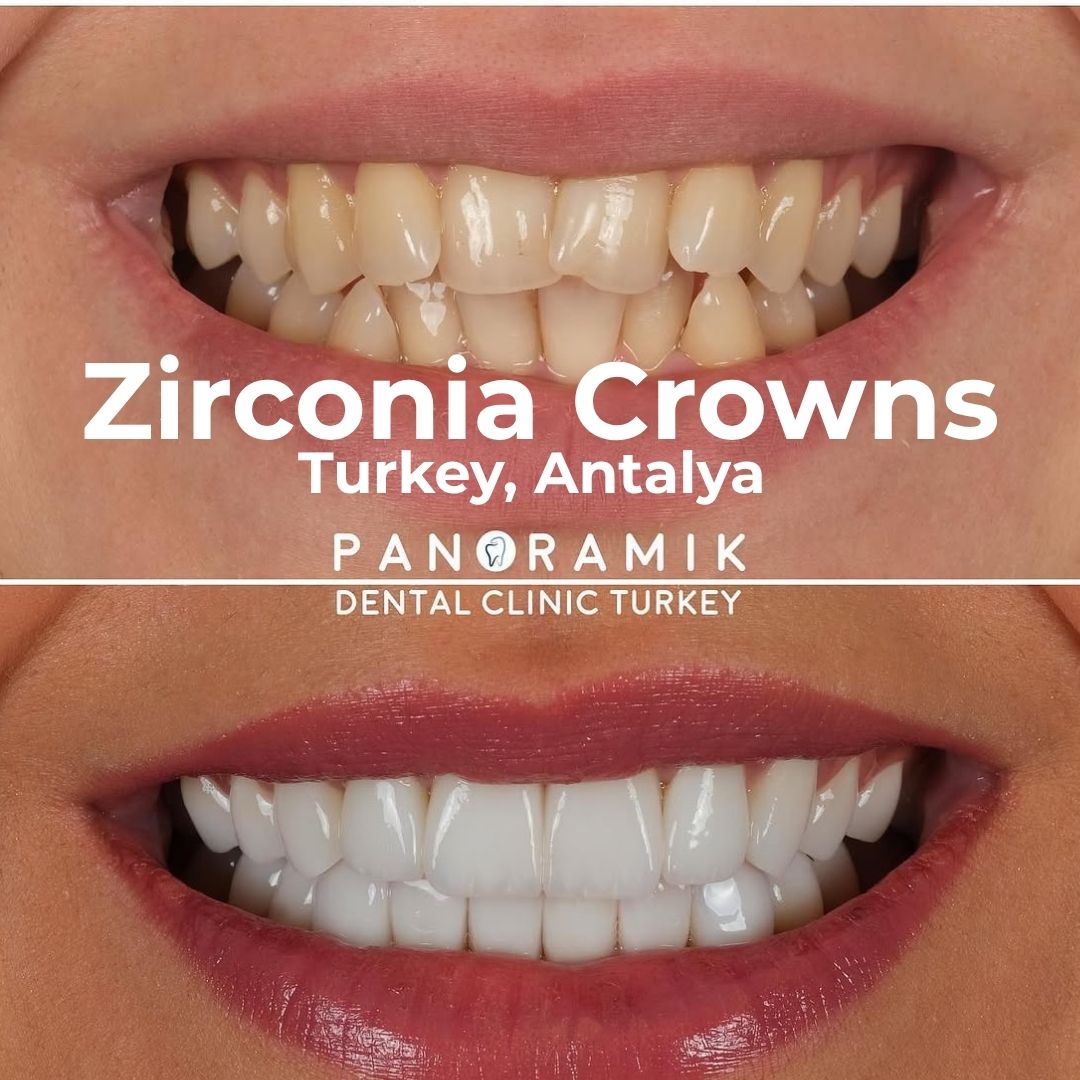
Modern zirconia crowns can provide a natural-looking appearance, particularly when high-translucency materials are used and the shade is carefully matched to the surrounding teeth.
Durability and long lifespan
Zirconia has high mechanical strength and fracture resistance, making it suitable for restorations exposed to substantial chewing forces. Its long-term performance, however, also depends on crown design, bite forces, oral habits and the condition of the supporting tooth.
Biocompatibility
Zirconia is generally considered highly biocompatible and is well tolerated by most patients. This allows the crowns to blend smoothly with the gum tissue and increases patient comfort. At Panoramik Oral and Dental Health Services, we prioritise our patients' health and comfort, making the most of this biocompatibility feature of zirconia crowns.
Disadvantages of Zirconia Crowns
As effective as zirconia crowns are, they're not without their downsides, and it's worth knowing about these before deciding if they're right for you.
Tooth reduction is still required
Even though zirconia is strong enough to be made quite thin, some amount of the natural tooth still needs to be filed down to make room for the crown. Because tooth preparation involves removing a small amount of natural tooth structure, the procedure is irreversible. Once a tooth has been prepared for a crown, it will generally require a permanent restoration to protect and restore its function.
Colour can't be adjusted later
Unlike natural teeth, zirconia crowns do not respond to conventional teeth whitening treatments. Once the final shade has been selected and the crown has been made, whitening products cannot make the restoration lighter. For this reason, patients considering teeth whitening may benefit from completing their whitening treatment before selecting the final shade of their zirconia crowns.
Repairs are limited
Repair options for zirconia crowns can be more limited than for some other restorative materials. Depending on the extent and location of the damage, a dentist may recommend repair, polishing or complete replacement.
Types of Zirconia Crowns
Zirconia crowns are available in different forms, with variations in strength, translucency, aesthetics, and manufacturing technique. The following are three commonly used types of zirconia crowns in modern restorative dentistry.
Monolithic Zirconia Crowns
Monolithic zirconia crowns are made entirely from a single piece of zirconia, without a separate porcelain layer. Their solid structure provides excellent strength and resistance to chipping, making them particularly suitable for back teeth such as molars, which are exposed to significant chewing forces. Although traditional monolithic zirconia can appear less translucent than natural enamel, newer generations offer improved translucency and a more natural appearance.
Layered Zirconia Crowns
Layered zirconia crowns consist of a strong zirconia core covered with a porcelain layer. This allows the dental technician to customize the color, shading, and translucency to achieve a more natural-looking result. They can be particularly useful in areas where detailed aesthetics are important, such as the front teeth. However, the porcelain veneer can be more susceptible to chipping than a fully monolithic zirconia crown.
High-Translucency Zirconia Crowns
High-translucency zirconia is designed to provide a more natural, enamel-like appearance by allowing more light to pass through the material. It offers a balance between aesthetics and strength and can be used for both anterior and selected posterior restorations, depending on the patient's clinical needs. Because it can be used without a separate porcelain veneer, it also avoids the additional risk of porcelain chipping associated with layered restorations.
Zirconia Crowns at Panoramik Dental Clinic in Antalya, Turkey
Zirconia Crown Procedure
The zirconia crown application process proceeds step by step and generally consists of the following stages:
Initial examination and planning
The first step is a detailed examination. The condition of the teeth is assessed, and the crown plan best suited to the patient's needs is determined. Depending on the case, photographs, impressions or digital scans may be used to plan the restoration and communicate the desired shape and shade to the dental laboratory.
Preparing the teeth
The teeth to be crowned are prepared using specialised instruments. During this process, the teeth are carefully reduced so that the crown fits precisely over the tooth. Tooth preparation is carried out carefully to ensure the crowns achieve an ideal fit, both aesthetically and functionally.
Fitting the crowns
Before final cementation, the dentist checks the crown's fit, margins, bite, contacts, shade and overall appearance. Once these factors are satisfactory, the crown is cemented in place using an appropriate dental luting material.
Are zirconia crowns right for you?
Zirconia crowns can be an excellent option when strength, durability and a natural-looking appearance are important. However, the best restorative material depends on factors such as the location of the tooth, the amount of remaining tooth structure, bite forces, aesthetic expectations and overall oral health.
Who is a good candidate for zirconia crowns?
Zirconia crowns may be suitable for patients who need a strong, durable, and natural-looking full-coverage restoration. They may be considered in the following situations:
- Severely damaged or weakened teeth
- Teeth with large fillings
- Discoloured teeth that cannot be adequately improved with whitening
- Worn or significantly weakened teeth
- Root canal-treated teeth that require additional protection
- Patients requiring a full-coverage dental restoration
Not every damaged or discoloured tooth requires a crown.
The need for a zirconia crown depends on the condition of the tooth, remaining tooth structure, bite, aesthetic requirements, and overall oral health. A dentist should evaluate each tooth individually before recommending a full-coverage restoration.
How long do zirconia crowns last?
Zirconia crowns can often last 10–15 years or longer with good oral hygiene and appropriate care, although no exact lifespan can be guaranteed. Their longevity depends on factors such as bite forces, bruxism, crown design, oral hygiene and the condition of the supporting tooth. Regular dental examinations can help identify problems early and protect both the crown and the underlying tooth.
Regular dental examinations can help identify potential problems early and ensure that the crown and the underlying tooth remain healthy over time.
How to care for zirconia crowns?
Zirconia crowns are highly durable, but proper care can help maintain the restoration and keep the surrounding teeth and gums healthy.
- Brush twice daily
- Floss or use interdental cleaning tools daily
- Attend regular dental examinations
- Avoid using your teeth to open packages
- Manage bruxism (teeth grinding) according to your dentist's recommendations; a night guard may be advised
- Get professional cleaning when recommended by your dentist
Zirconia Crowns vs Porcelain Crowns
“Porcelain crown” is a broad term that may refer to different ceramic or porcelain-based restorations, so properties such as strength, aesthetics and tooth preparation vary depending on the specific material used.
Both zirconia and porcelain crowns can provide durable and natural-looking dental restorations, but they differ in strength, aesthetics, and clinical applications. The best choice depends on the location of the tooth, aesthetic expectations, bite forces, and the type of material selected.
| Feature | Zirconia Crowns | Porcelain Crowns |
|---|---|---|
| Durability | Very high | High |
| Aesthetics | Natural-looking | Highly aesthetic |
| Strength | Excellent | Depends on the material |
| Tooth Preparation | Depends on the design and clinical requirements | Depends on the material and restoration design |
| Biocompatibility | Excellent | Generally excellent |
| Best Suited For | Front and back teeth, depending on the type | Primarily aesthetic restorations, depending on the type |
If you are considering zirconia crowns a clinical examination can help determine whether they are suitable for your teeth. At Panoramik Oral and Dental Health Services, treatment planning takes into account the condition of the tooth, bite forces, aesthetic expectations and overall oral health before a crown material is recommended.
Frequently Asked Questions About Zirconia Crowns
Are zirconia crowns better than porcelain crowns?
It depends on your individual needs and priorities. Zirconia offers excellent strength, making it a popular choice for teeth exposed to significant chewing forces. Porcelain-based restorations can offer excellent optical properties and aesthetics in certain cases. Modern high-translucency zirconia can also provide a highly natural appearance. Your dentist will consider the location of the tooth, your bite, the condition of the tooth, and your aesthetic goals when recommending the most suitable material.
How long do zirconia crowns last?
Zirconia crowns can often last 10–15 years or longer with good oral hygiene and appropriate care, although no exact lifespan can be guaranteed. Their longevity depends on factors such as bite forces, bruxism, crown design, oral hygiene and the condition of the supporting tooth. Regular dental examinations can help identify problems early and protect both the crown and the underlying tooth.
Are zirconia crowns suitable for front teeth?
Yes. Modern high-translucency zirconia can provide an aesthetic and natural-looking result for front teeth. However, the most suitable material depends on factors such as the individual tooth, the color of the surrounding teeth, the gum line, and the patient's aesthetic requirements. In some cases, another type of dental ceramic may be recommended.
Can zirconia crowns be whitened?
No. The color of a zirconia crown cannot be changed with conventional teeth whitening treatments because whitening products only affect natural tooth structure. If you are considering teeth whitening, it is generally advisable to complete the whitening treatment before the crown is made so that its shade can be matched to your desired tooth color.
Do zirconia crowns look natural?
Yes, zirconia crowns can provide a highly natural-looking appearance, particularly when high-translucency zirconia is used. Modern zirconia materials are designed to reproduce the light-reflecting properties of natural teeth more closely. The final appearance also depends on the shade, translucency, crown design, and quality of the laboratory work.
Are zirconia crowns safe?
Zirconia is generally considered a biocompatible dental material and is well tolerated by most patients. It is also metal-free, which makes it a suitable option for patients who prefer metal-free dental restorations. As with any dental treatment, your dentist should evaluate your individual oral health and treatment needs before recommending a zirconia crown.
Do zirconia crowns damage opposing teeth?
When properly designed, adjusted, and polished, zirconia crowns can function effectively against opposing teeth. However, bite forces, crown surface characteristics, and conditions such as bruxism can influence wear over time. Careful adjustment and polishing can help optimize the contact between the crown and opposing teeth. For patients who grind or clench their teeth, a night guard may also be recommended.
How many appointments are needed for zirconia crowns?
Zirconia crown treatment commonly requires two or more appointments, depending on the clinical situation and the technology used by the dental clinic. Some dental clinics with chairside CAD/CAM or in-house milling technology may be able to provide a crown in a single visit, depending on the case and the available technology.
Can zirconia crowns be repaired?
The repairability of a zirconia crown depends on the type and extent of the damage. Minor surface defects may sometimes be managed clinically, while significant cracks, fractures, or structural damage may require replacement of the crown. Your dentist can assess the condition of the restoration and determine the most appropriate treatment.
How should I clean zirconia crowns?
Zirconia crowns should generally be cared for in much the same way as natural teeth. Brush twice a day with fluoride toothpaste and clean between the teeth daily using dental floss or interdental brushes. Regular dental check-ups are also important for monitoring the crown, the surrounding gums, and the supporting tooth. Your dentist may recommend additional oral hygiene measures based on your individual needs.
For all procedure steps and care recommendations, you can review our zirconia dental crowns page, and for a comparison with laminate veneers, see our zirconia vs. laminate veneers article.