




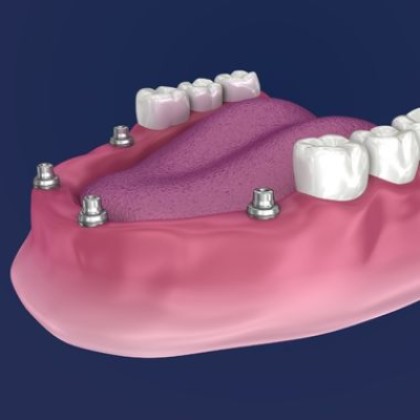


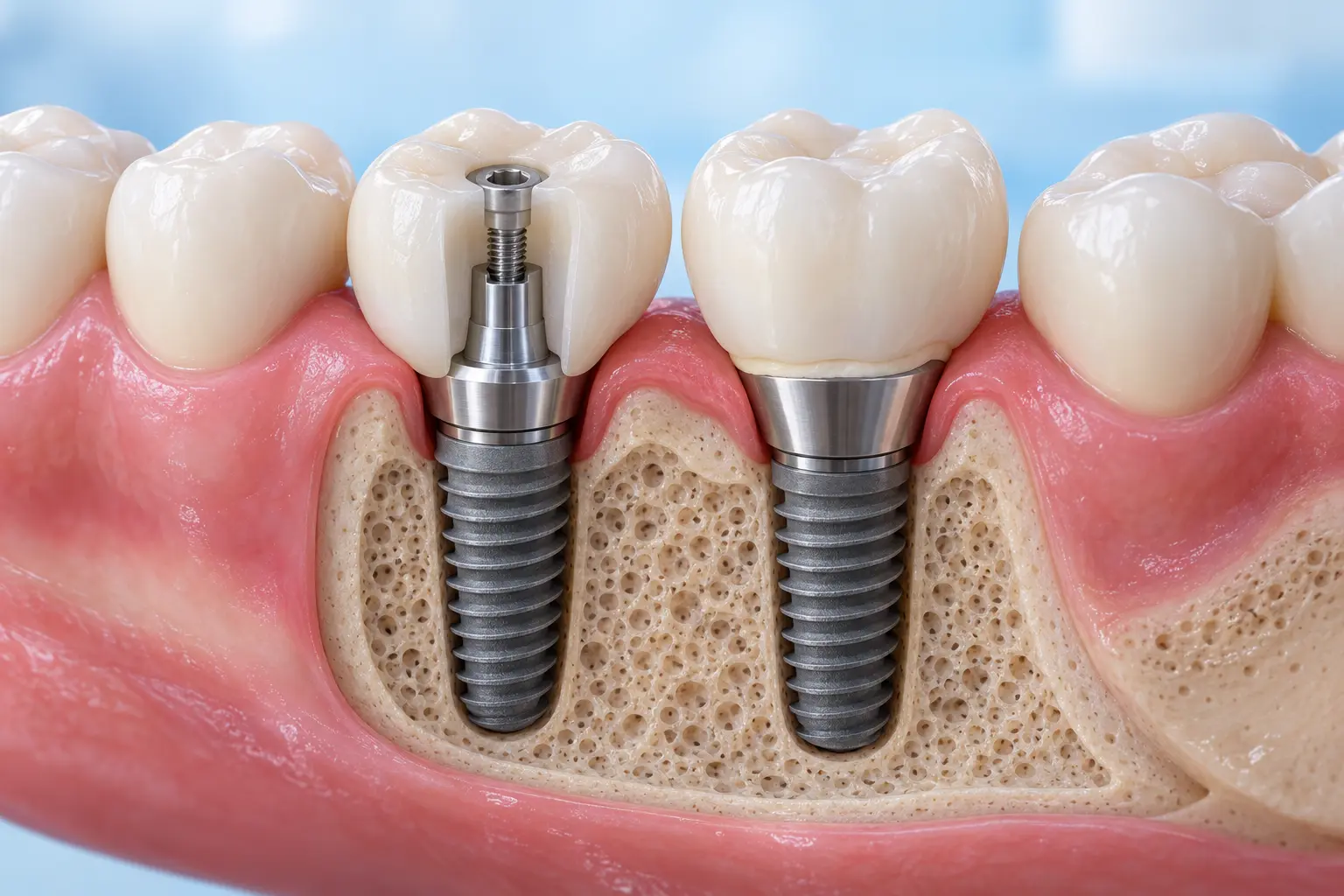
The difference between screw-retained and cement-retained implants is not how the implant is placed in the bone, but how the tooth on top is attached to the implant. In both methods, the implant itself is usually a titanium screw placed in the jawbone. With a screw-retained restoration, the tooth is secured with a small screw and can be removed by the dentist when needed. With a cement-retained restoration, the tooth is bonded with dental cement onto a connecting piece (the abutment) attached to the implant. Which one is better depends on where the tooth sits in the mouth, the angle of the implant and whether a single tooth or a full arch is being treated.
What is the difference between screw-retained and cement-retained implants?
Implant treatment is made up of three parts: the implant placed in the bone, the connecting piece that joins the implant to the tooth (the abutment) and the visible tooth on top (the crown). The terms screw-retained and cement-retained describe how this top tooth is fixed in place.
Screw-retained implant crowns
Depending on the restoration design, the crown and abutment may be separate components or combined into one unit. The restoration is secured to the implant or abutment with a small screw accessed through the biting surface or the inner surface of the tooth. Once the screw is tightened, the access hole is sealed with tooth-coloured filling material. The dentist can open this filling, loosen the screw and remove the tooth without damaging it.
Cement-retained implant crowns
First the abutment is screwed onto the implant, then the crown is bonded onto the abutment with dental cement, much like a crown on a natural tooth. There is no screw hole on the surface of the tooth; it looks and feels like a conventional crown, such as a zirconia crown.
Screw-retained or cement-retained implants: which is better?
Both methods are known to work well for many years when used in the right situation; neither can be said to be better for every patient. The table below summarises the points your dentist weighs up when deciding:
| Feature | Screw-retained | Cement-retained |
|---|---|---|
| Retrievability | The dentist can remove and refit the tooth | If bonded with permanent cement, it usually has to be cut off |
| Risk of excess cement | None | Cement left under the gum can cause inflammation around the implant |
| Appearance | The screw hole is sealed with filling; front teeth need careful planning | No screw hole; the surface is intact |
| Implant angle | The screw channel must exit in a suitable position | Angle differences are easier to correct with an angled abutment |
| Limited space | An advantage when the space between the upper and lower teeth is limited | Needs enough abutment height for the cement to hold |
| Repair and maintenance | The tooth can be removed to repair chipped porcelain or a loose screw | Repairs often mean the tooth has to be remade |
In short, screw-retained restorations make maintenance and repair easier, while cement-retained restorations offer better aesthetics and more flexibility with implant angles. The decision is based on whether the tooth is at the front or back of the mouth, the thickness of the gum, the angle of the implant and the space between the jaws.
When is each option preferred?
- Single implant for a back tooth: Screw-retained crowns are often chosen because the screw hole isn't visible, and being removable makes maintenance easier.
- Single implant for a front tooth: If the screw channel can exit through the inner surface of the tooth, a screw-retained crown can be used; if not, a cement-retained crown may be chosen.
- Implant-supported bridge: For bridges supported by more than one implant, screw retention is usually preferred because it makes repairs easier. See our dental implant bridge article for details.
- Full-arch fixed prosthesis: In full-arch treatments such as All-on-4 implants, the prosthesis is usually screw-retained so it can be removed at check-ups and the area around the implants cleaned.
Is there such a thing as a "glued-in implant"?
No implant is glued into the bone; every implant is placed in the bone and held in place as it fuses with it. When people talk about a "glued" or "cemented" implant, they mean the method where the tooth on top of the implant is bonded with cement.
These words are sometimes used loosely: a "screw-in tooth" may simply mean an implant, while a "glued-in tooth" may refer to a bridge or crown supported by neighbouring teeth. If you're weighing up an implant or a bridge to replace a missing tooth, our dental implants in Turkey and dental bridges pages explain both options separately.
Can a cement-retained implant crown come off, and how is it removed?
A crown bonded with cement can come away from the implant and fall out if the cement breaks down over time. In that case, the implant itself stays in place; only the tooth on top comes off. If the crown and abutment are undamaged, the dentist can clean them and bond them back on.
When a crown fixed with permanent cement has to be removed deliberately, it is usually cut off and a new one is made. For this reason, the dentist may choose temporary cement or a screw-retained restoration for teeth that may need to be removed in the future.
If it feels like the implant itself is moving rather than the tooth, that is a different problem; we explain the warning signs in our signs of a failed implant article.
Can an implant crown be glued back? What to do if it falls out
- Keep the crown safe and call the clinic; in most cases the same crown can be refitted.
- Don't use denture adhesive or superglue at home. These stop the tooth from seating correctly, can cause inflammation around the implant and make it harder to refit the crown.
- With a screw-retained crown, if the filling covering the screw hole has come out or the tooth has started to move, the screw may have loosened; arrange a check-up without delay.
Caring for screw-retained and cement-retained implants
With either method, keeping the gum area around the implant clean is the most important factor in how long the implant lasts. Clean around the implant every day with floss, interdental brushes or a water flosser, and attend regular check-ups. For more on caring for your implant, see our recovery after dental implant guide.
Average implant prices in Turkey
In Turkey, the price of an implant tooth is made up of three parts: the implant, the abutment and the crown. Whether the crown is screw-retained or cement-retained usually makes little difference to the total on its own. The price is mainly determined by the implant brand, the type of abutment and the crown material.
The figures below are Panoramik Dental Clinic's average published prices in GBP. Prices at other clinics in Turkey may vary.
| Treatment | Average Price |
|---|---|
| Implant (domestic brand) | £270 |
| Implant – Megagen ST | £320 |
| Implant – Medentika (by Straumann) | £450 |
| Implant – Nobel Biocare | £550 |
| Implant – Astra Tech | £650 |
| Implant – Straumann Roxolid | £750 |
| Abutment | £50–£129 |
| Porcelain-fused-to-metal crown | £90 |
| Zirconia crown | £140 |
| E-max crown | £170 |
| All-on-4 (per arch) | £2,500–£6,000 |
As an example, a single implant tooth with a domestic implant, an abutment and a porcelain-fused-to-metal crown starts from around £410. With a Straumann Roxolid implant and a zirconia or E-max crown, the total rises to around £940–£1,050. If you need a bone graft or sinus lift before the implant is placed, this is priced separately.
These prices give you an idea of the potential cost, but you'll need an examination and X-rays for an accurate quotation. When comparing quotes, ask whether the abutment, crown, temporary teeth and follow-up visits are included. For more detail, see our single implant price page and price list.
Planning implant crowns in Antalya
The choice between screw-retained and cement-retained restorations is part of the planning done before the implant is placed; the angle and position of the implant are decided with this in mind. We plan implant treatment at our Panoramik Dental Clinic branches in Antalya.
To book a consultation use our contact page.
Final thoughts
Both screw-retained and cement-retained restorations can be used with confidence when properly planned. What matters is that the choice is made before the implant is placed, based on the position of the tooth and the structure of your mouth.
Frequently Asked Questions
There is no single method that is better for every patient. Screw-retained restorations are removable, which makes maintenance and repair easier; cement-retained restorations have no screw hole, so aesthetics and flexibility with implant angles stand out. The choice depends on the position of the tooth, the angle of the implant and whether a single tooth or a full arch is being treated.
In both methods, the implant itself is usually a titanium screw placed in the bone. The difference is how the tooth on top is fixed: with a screw-retained restoration, the tooth is secured to the implant or abutment with a small screw; with a cement-retained restoration, it is bonded onto the abutment with dental cement.
A crown bonded with cement can come away from the implant and fall out if the cement breaks down. The implant stays in place; if the crown and abutment are undamaged, the dentist can clean them and bond them back on.
A crown bonded with permanent cement is usually cut off and replaced with a new one. This should only be done by a dentist; trying to remove the tooth at home can damage the implant.
No. Denture adhesive or superglue stops the tooth from seating correctly and can cause inflammation around the implant. Keep the crown and bring it to the clinic; in most cases the same crown can be refitted.
Once the screw is tightened, the access hole is sealed with tooth-coloured filling material. It is hard to notice on back teeth or on the inner surface of front teeth; for front teeth, the treatment is planned so the screw channel exits where it can't be seen.
In full-arch fixed prostheses such as All-on-4, the prosthesis is usually screw-retained. This means it can be removed at check-ups so the area around the implants can be cleaned and any repairs carried out.
At Panoramik Dental Clinic, a single implant tooth with a domestic implant, an abutment and a porcelain-fused-to-metal crown starts from around £410. With a Straumann Roxolid implant and a zirconia or E-max crown, the total is around £940–£1,050. Whether the crown is screw-retained or cement-retained usually makes little difference to the price on its own.
In everyday language, a screw-in tooth usually means a dental implant. Technically, it refers to a crown or bridge fixed onto an implant with a screw.